











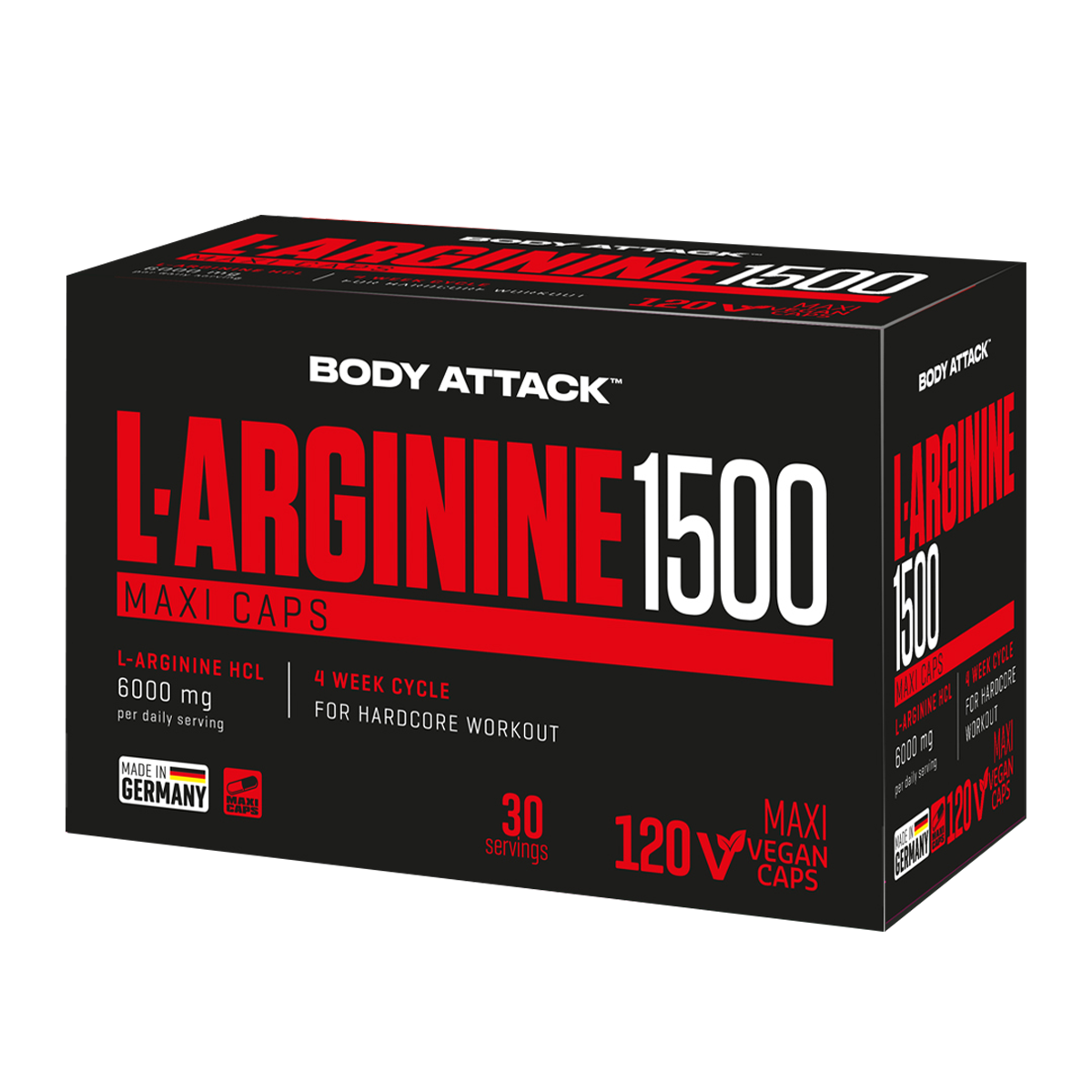
Die Erfahrung zeigt, dass es im Bodybuilding sehr gerne als “Pre-Workout Supplement” genommen wird, also direkt vor dem Training. Der Grund: L-Arginin kann den anfallenden Ammoniak aus den abgebauten Proteinen besser als Harnstoff binden und über die Nieren entsorgen. Man spricht auch vom Harnstoffzyklus, der für die Entsorgung der Harnsäure zuständig ist. Die Harnsäure beeinflusst wiederum unseren Säuren-Basen-Haushalt im Blut, der sehr engt geregelt ist. Der pH-Wert liegt im Blut zwischen 7,35 und 7,45. Eine Verschiebung kann den Energiefluss und auch andere Stoffwechselvorgänge behindern, weil Enzyme, die aus Nährstoffen Energie produzieren, mögen kein saures Milieu. Auch die Körperzellen und deren Proteinstrukturen reagieren sehr sensible auf Säuren. Daher dient der Harnstoffzyklus und auch L-Arginin als wichtiger Säuren-Regulator bzw. Säurenpuffer.
- Kraftzuwachs
- Regeneration
- Muskelaufbau
- Verbesserung des Säuren-Basen-Gleichgewichtes
Overview
Ein erhöhter Bedarf an L-Arginin kann beispielsweise bei hoher sportlicher Belastung, während einer strengen Diät oder im Wachstum entstehen. Der Grund hierfür ist, dass die Stoffwechselprozessen (insbesondere der Proteinstoffwechsel) auf Hochtouren laufen. Daher sollten Sportler und auch Figurbewusste auf eine ausreichende Proteinzufuhr über die Nahrung achten, damit der Körper alle acht essentiellen Aminosäuren in ausreichender Menge zur Verfügung gestellt bekommt. Denn diese acht Aminosäuren kann der Körper selbst nicht bilden und ohne diese können die anderen zwölf nicht-essentiellen Aminosäuren (auch L-Arginin) nicht gebildet werden. Das ist sowohl für Kraft- als auch für Ausdauersportler von großer Bedeutung.
- Ein normales Blutgefäß
- Arginin wird an den Innenwänden der Blutgefäße in Stickoxid(NO) umgewandelt.
- Eine höhere NO-Konzentration führt zur Entspannung der glatten Muskelzellen und somit zu einer Erweiterung der Blutgefäße
- Auf diese Weise werden mehr Sauerstoff, Nährstoffe und anabole Hormone an die Muskeln geliefert.
Die Aminosäuren L-Glutamin, L-Ornithin und L-Arginin gehören zu den Aminosäuren, die in den Harnstoffzyklus einfließen und dort mit am Abbau der Stoffwechselabfallprodukte beteiligt sind. Besonders im zentralen Stoffwechselorgan der Leber sind viele Enzyme aktiv, die besonders vermehrt Arginine für den Abbau benötigen.
Sie hat folglich auf viele Stoffwechselvorgänge im Körper eine Wirkung, insbesondere auf den Proteinstoffwechsel, der durch eine ausreichende Zufuhr an Proteinen auch am Muskelaufbau beteiligt ist. Da Protein- und Energiestoffwechsel ineinander übergehen bzw. parallel ablaufen, sind die Abbauprozesse im Harnstoffzyklus elementar. Denn durch den frühzeitigen Abbau der Stoffwechselendprodukte können auch die energieproduzierenden Stoffwechselvorgänge besser ablaufen.
Auch im Energiestoffwechsel spielt es eine indirekte Rolle. Der Körper verbraucht für muskuläre Leistungen Kreatin, das er unter anderem selbst bildet. Zusammen mit anderen Aminosäuren ist es an der Herstellung von Kreatin beteiligt, wodurch die Kreatinphosphatspeicher in den Muskeln stetig versorgt werden können. Sind die Speicher mit Kreatin gefüllt, kann der direkte Kraftstoff ATP (Adenosintriphosphat) bei kurzen und intensiven Belastungen schneller gebildet werden. Das erhöht die körperlichen Leistungen beim Schnellkraftleistungen im Rahmen kurzzeitiger intensiver körperlicher Belastungen (bei mindestens drei Gramm Kreatin täglich) und in Verbindung mit Proteinen kann sogar der Muskelaufbau gefördert werden.
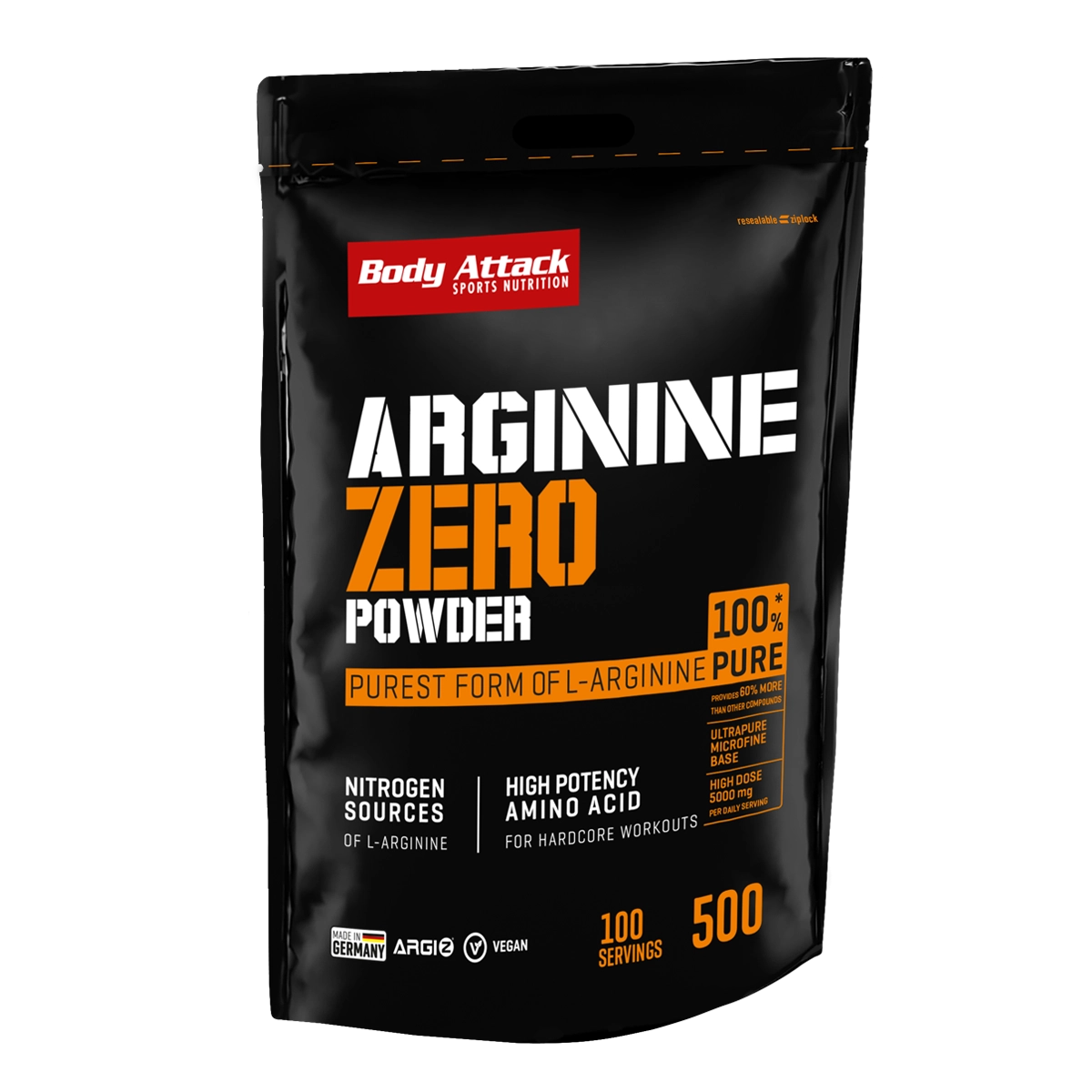
Die Kombination von Arginin und Alpha-Ketoglutarat nennt man AAKG und ist relativ geschmacksneutral. Es wird besser als Arginine HCL aufgenommen, weil der Körper das Alpha-Ketoglutarat selbst auch bildet. Daher wird es auch sehr effizient vom Körper verwertet. Noch besser ist aber das Arginine BASE (ARGININE ZERO), da es sich um das 100 Prozent reinste L-Arginine handelt. Das heißt, es liefert viel mehr L-Arginine als die anderen beiden Formen. Warum? Bei Arginine BASE ist keine Verbindung mit angehängt. Daher besteht es zu 100 Prozent reines L-Arginin. Es werden zwar unter dem Strich alle Formen als Arginine im Körper gut aufgenommen, aber bei dem L-Arginine BASE (Body Attack ARGININE ZERO POWDER)wird bis zu 30 Prozent mehr an L-Arginin bereitgestellt. Damit bekommt der Körper mehr L-Arginine gegenüber den anderen beiden Formen. Das reinste und stärkste L-Arginine ist die BASE und gehört zur beliebtesten und fortschrittlichsten Form, allerdings wirken auch Pre-Workout Drink wie Attack 3.0 in Kombi mit L-Arginine BASE sehr gut.
Unter den 20 Aminosäuren wird auch L-Arginin verbraucht, da sie an den Abbau- und Aufbaufunktionen im Proteinstoffwechsel teilnimmt. Auch das Vitamin B6 ist daran beteiligt und trägt zur Erhaltung des Protein- und Glucosestoffwechsels bei. Daher ist der tägliche Verzehr von Nahrungsmitteln, wie Walnüssen, Erdnüssen, Kürbiskernen, Pinienkernen oder Huhn wichtig. Alternativ können auch Nahrungsergänzungsmittel eingesetzt werden, um eine gleiche Wirkung zu erzielen.
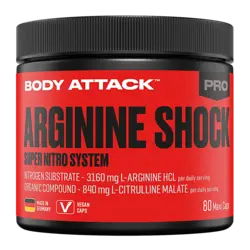
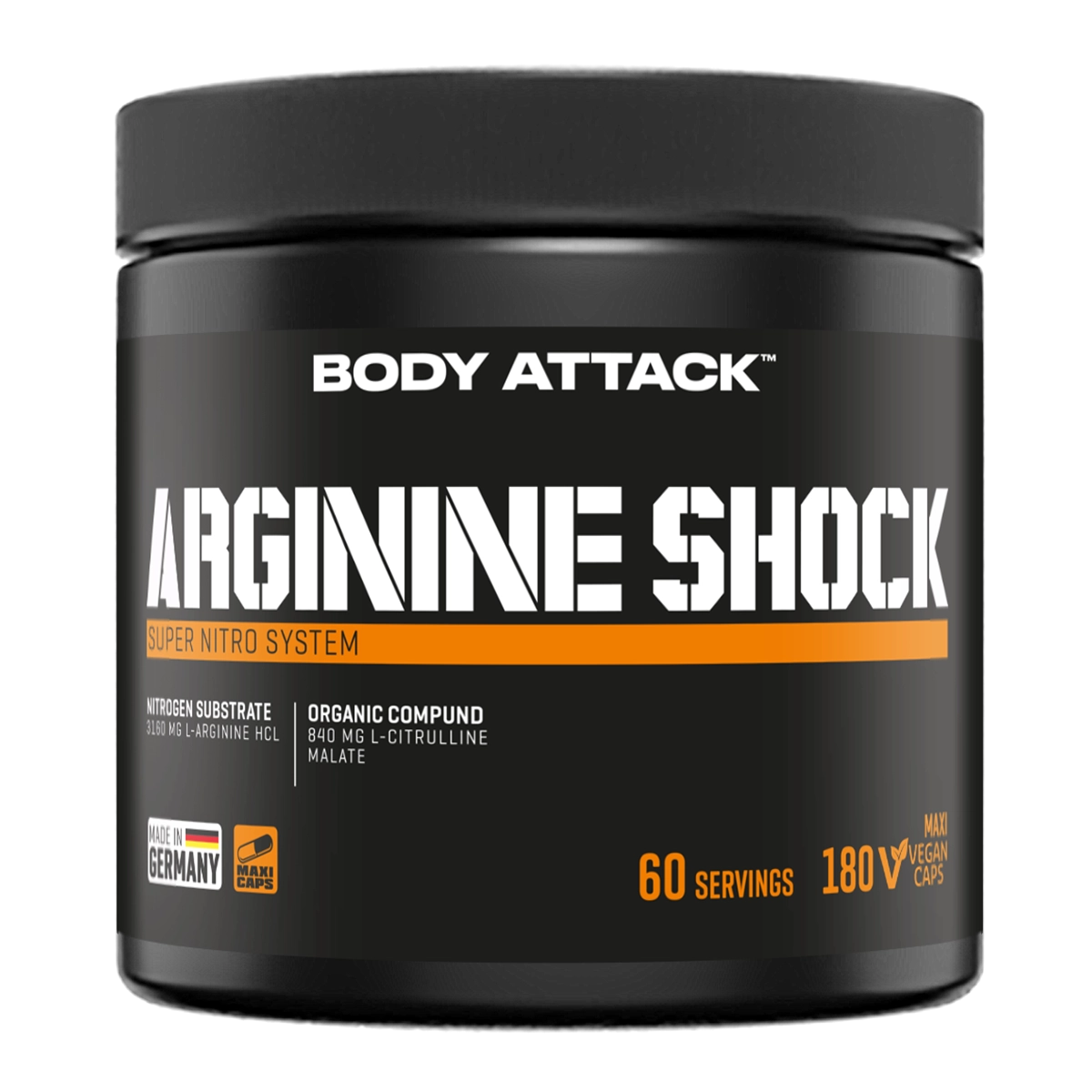
Bei einem hohen Proteinumsatz oder einseitiger Ernährung kann es eine ebenso sinnvolle Nahrungsergänzung für die tägliche Ernährung sein wie Vitamine. Body Attack bietet hier Kapseln und auch die Pulverform an. Von Sportlern werden häufig Kapseln, wie beispielsweise Arginine-Shock vor dem Training genommen. Alternativ werden die Aminosäuren in Pulverform (Arginine Zero von Body Attack) zusammen mit kohlenhydratreicher Flüssigkeit oder einem Proteinshake verzehrt.
Für einen dauerhaft erhöhten L-Arginin-Spiegel sollte man auf mehrere kleinere Dosierungen über den Tag verteilt setzen, beispielsweise 3 g L-Arginin morgens nach dem Aufstehen und 3 g L-Arginin vor dem Zubettgehen. An TAgen mit Training jeweils 3 g L-Arginine vor und danach. Beachte hierbei aber bitte, dass es bei Mengen von über 6 g L-Arginine als einzelne Dosierung zu Unverträglichkeiten und Durchfall kommen kann. Wer den maximalen Effekt erzielen will, sollte auf ARGININEZERO setzen!
Der Vorteil der Kapselform liegt in der einfachen Dosierung. Man braucht also keine Waage, sondern kann sich einfach eine bestimmte Anzahl an Kapseln zu Gemüte führen.
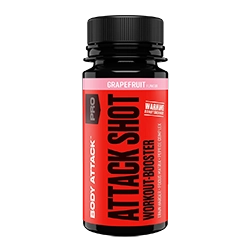
Weiterhin gibt es Arginine auch in Form eines Shots, wie man es bei Energydrinks gewöhnt ist. Es ist hier flüssig und meist mit anderen, zuckerhaltigen Zutaten vermischt. Nur für eine Muskelaufbau-Phase geeignet!
Wer bei Mengen von bis zu 6g L-Arginin am Tag mit Verdauungsproblemen zu kämpfen hat, der sollte die Menge am besten über den Tag verteilt ( 2 x 3 g L-Arginine) einnehmen und am besten zu den Mahlzeiten (langsamere Resorption).
Falls Du das L-Arginin als Pre-Workout Supplement oder Monoprodukt vor dem Training nutzen möchtest, tritt wir Wirkung bereits 20-30 Minuten nach der Einnahme ein. Du kannst also einfach den Shake Zuhause trinken, ins Studio fahren und anfangen, zu trainieren!
Welches ist das Beste?
Jeder Mensch ist indviduell, daher am besten alle Formen von L-Arginine testen. Aber die stärkste Form ist das Arginine ZERO, weil es zu 100 Prozent pures L-Arginine bereitstellt. Sie gilt als die fortschrittlichste Form von Arginine und sorgt für eine effektivere Absorption und Versorgung.
Ist es auch für Frauen geeignet?
Selbstredend! Auch Frauen können von der Wirkung von profitieren. Es spricht definitiv nichts gegen die Einnahme.