





























2 Articles
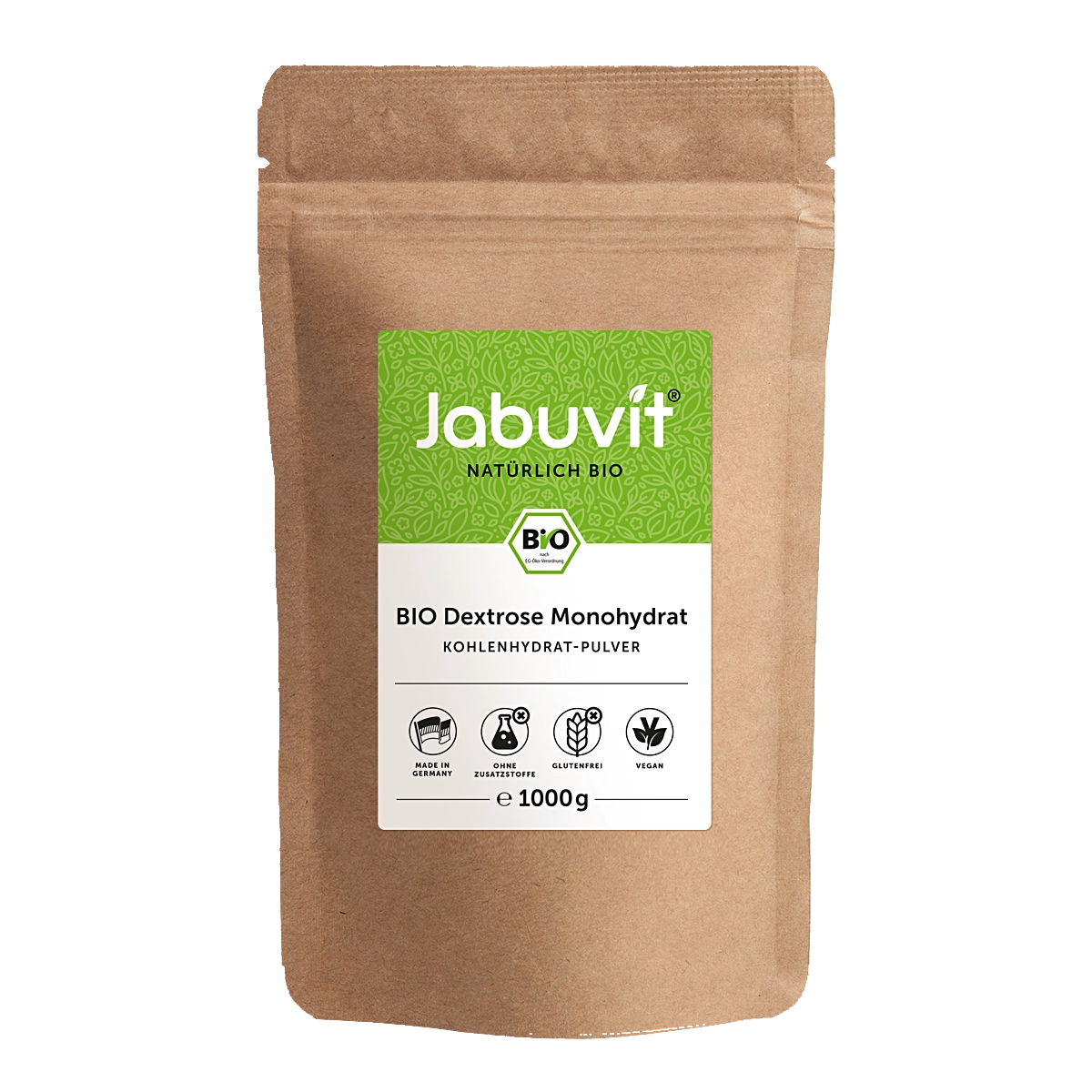

Dextrose (Glucose) gehört in die Gruppe der Kohlenhydrate und ist damit ein wichtiger Energielieferant. Weil der Traubenzucker strukturell als Einfachzucker aufgebaut ist, ist er im menschlichen Organismus nach der Einnahme schnell verfügbar. Im Gegensatz zu anderen Kohlenhydraten, wie z. B. komplexe Kohlenhydrate aus Teigwaren, Reis und Kartoffeln, muss Glucose nicht erst im Dünndarm aufgespalten werden, sondern gelangt schnell in den Blutkreislauf. Der Blutzuckerspiegel erhöht sich.
Komplexe Kohlenhydrate (Zweifach- und Mehrfachzucker) müssen dagegen zuerst im Verdauungstrakt zu einzelnen Bausteinen abgebaut werden, um dann in Form von einfachem Zucker (Monosaccharid) zwecks Energiebereitstellung zur Verfügung zu stehen.
Komplexe Kohlenhydrate (Zweifach- und Mehrfachzucker) müssen dagegen zuerst im Verdauungstrakt zu einzelnen Bausteinen abgebaut werden, um dann in Form von einfachem Zucker (Monosaccharid) zwecks Energiebereitstellung zur Verfügung zu stehen.
Unter den Begriff Zucker fallen in der Ernährungswissenschaft die sogenannten Kohlenhydrate, auch Saccharide genannt. Es gibt Einfachzucker (Monosaccharide) wie Glucose, Zweifachzucker (Disaccharide) wie Malz- oder Milchzucker, Mehrfachzucker (Oligosaccharide) wie Raffinose sowie Vielfachzucker (Polysaccharide) wie Stärke.
Der Bedarf an Glucose und demzufolge die Einnahmemenge der entsprechenden Produkte, richtet sich nach individuellen Faktoren. Insbesondere die Intensität der körperlichen Belastung ist ein wichtiges Kriterium für diese Kohlenhydrate. Je häufiger und intensiver trainiert wird, desto höher ist der Bedarf an Glucose.
Es ist empfehlenswert, vor und nach dem Krafttraining jeweils eine Menge von 40 bis 60 Gramm einzunehmen. Wer sich in Wettkampfphasen befindet, kann diese Dosis auch gleichmäßig über die Belastungsphasen mit der größten Anstrengung verteilen. Viele Sportler, die Ausdauersportarten betreiben, mischen sich Getränke (Fruchtsaftschorle oder Tee), die 60 bis 80 Gramm Glucose und ein Gramm Kochsalz enthalten. Auf diese Weise können sie ihren gesteigerten Bedarf energiereicher Kohlenhydrate aus Glucose decken.
Wer auf Dextrose Produkte als Sportnahrung zurückgreifen möchte, kann sich zwischen zahlreichen Darreichungsformen entscheiden. Besonders verbreitet sind Pulver mit Glucose. Glucose-Pulver kann einfach und schnell in Getränken wie z. B. Wasser aufgelöst werden. Auch für Milch und Protein-Shakes lassen sich viele Glucose-Pulver einsetzen. Da ausreichende Flüssigkeitsaufnahme während des Trainings und nach dem Training wichtig ist, erfreuen sich die Getränke Carbo Loader von Body Attack großer Beliebtheit.
Viele Sportler und Fitness-Begeisterte greifen auch zu dextrosehaltigen Riegeln (Bars). Diese Riegel sind praktisch, weil sie nicht als Getränk zubereitet werden müssen, sondern jederzeit gegessen werden können.
Es ist empfehlenswert, vor und nach dem Krafttraining jeweils eine Menge von 40 bis 60 Gramm einzunehmen. Wer sich in Wettkampfphasen befindet, kann diese Dosis auch gleichmäßig über die Belastungsphasen mit der größten Anstrengung verteilen. Viele Sportler, die Ausdauersportarten betreiben, mischen sich Getränke (Fruchtsaftschorle oder Tee), die 60 bis 80 Gramm Glucose und ein Gramm Kochsalz enthalten. Auf diese Weise können sie ihren gesteigerten Bedarf energiereicher Kohlenhydrate aus Glucose decken.
Was ist eigentlich Maltodextrin?
Maltodextrin ist ein wasserlösliches Kohlenhydrate Gemisch. Das Kunstwort Maltodextrin setzt sich aus Bestandteilen von Maltose (Malzzucker) und Traubenzucker zusammen. Maltodextrin wird aus dem vollwertigen Kohlenhydrate Träger Mais gewonnen und ist ein Mehrfachzucker mit einer geringeren Süßkraft als Traubenzucker. Im Vergleich zu Glucose verweilt Maltodextrin kürzer im Magen.
Maltodextrin ist ein wasserlösliches Kohlenhydrate Gemisch. Das Kunstwort Maltodextrin setzt sich aus Bestandteilen von Maltose (Malzzucker) und Traubenzucker zusammen. Maltodextrin wird aus dem vollwertigen Kohlenhydrate Träger Mais gewonnen und ist ein Mehrfachzucker mit einer geringeren Süßkraft als Traubenzucker. Im Vergleich zu Glucose verweilt Maltodextrin kürzer im Magen.
Wer auf Dextrose Produkte als Sportnahrung zurückgreifen möchte, kann sich zwischen zahlreichen Darreichungsformen entscheiden. Besonders verbreitet sind Pulver mit Glucose. Glucose-Pulver kann einfach und schnell in Getränken wie z. B. Wasser aufgelöst werden. Auch für Milch und Protein-Shakes lassen sich viele Glucose-Pulver einsetzen. Da ausreichende Flüssigkeitsaufnahme während des Trainings und nach dem Training wichtig ist, erfreuen sich die Getränke Carbo Loader von Body Attack großer Beliebtheit.
Viele Sportler und Fitness-Begeisterte greifen auch zu dextrosehaltigen Riegeln (Bars). Diese Riegel sind praktisch, weil sie nicht als Getränk zubereitet werden müssen, sondern jederzeit gegessen werden können.
Dextrose wird häufig auch als Treibstoff für Gehirn und Muskeln bezeichnet. Energie in Form von Zucker muss dem Körper über die Nahrung zugeführt werden, damit geistige und körperliche Leistungen überhaupt möglich sind. Kohlenhydrate spielen dabei eine wichtige Rolle, denn sowohl das Gehirn als auch die Muskeln sind auf schnelle Energie über einfache Zucker wie Traubenzucker angewiesen, da beide Organe zu den großen Energieverbrauchern im Körper zählen.
Laut Health-Claims-Verordnung tragen blutzuckersteigende Kohlenhydrate wie Traubenzucker zur Aufrechterhaltung der normalen Gehirnfunktion bei. Auch Muskeln sind auf zerlegte Zucker angewiesen. Gerade bei körperlichen Belastungen steigt der Zucker-Bedarf bei Sportlern an. Im Gegensatz zum Gehirn können die Muskeln Dextrose in Form von Glykogen speichern. Eine ausreichende Kohlenhydrate Versorgung ist gerade für Sportler wichtig, um die Energieversorgung konstant zu halten und Leistungsabfällen entgegenzuwirken.
Die Aufnahme von Dextrose nach dem Training ist sinnvoll, weil es die Regeneration des Körpers fördert. In Kombination mit Whey Protein wird eine Verwertung der Proteine aufgrund der sportlichen Aktivität durch die Glykogenese verhindert. Durch die zusätzliche Einnahme von Dextrose kann das Eiweiß somit besser verwertet werden.
Laut Health-Claims-Verordnung tragen blutzuckersteigende Kohlenhydrate wie Traubenzucker zur Aufrechterhaltung der normalen Gehirnfunktion bei. Auch Muskeln sind auf zerlegte Zucker angewiesen. Gerade bei körperlichen Belastungen steigt der Zucker-Bedarf bei Sportlern an. Im Gegensatz zum Gehirn können die Muskeln Dextrose in Form von Glykogen speichern. Eine ausreichende Kohlenhydrate Versorgung ist gerade für Sportler wichtig, um die Energieversorgung konstant zu halten und Leistungsabfällen entgegenzuwirken.
Die Aufnahme von Dextrose nach dem Training ist sinnvoll, weil es die Regeneration des Körpers fördert. In Kombination mit Whey Protein wird eine Verwertung der Proteine aufgrund der sportlichen Aktivität durch die Glykogenese verhindert. Durch die zusätzliche Einnahme von Dextrose kann das Eiweiß somit besser verwertet werden.