










9 Articles

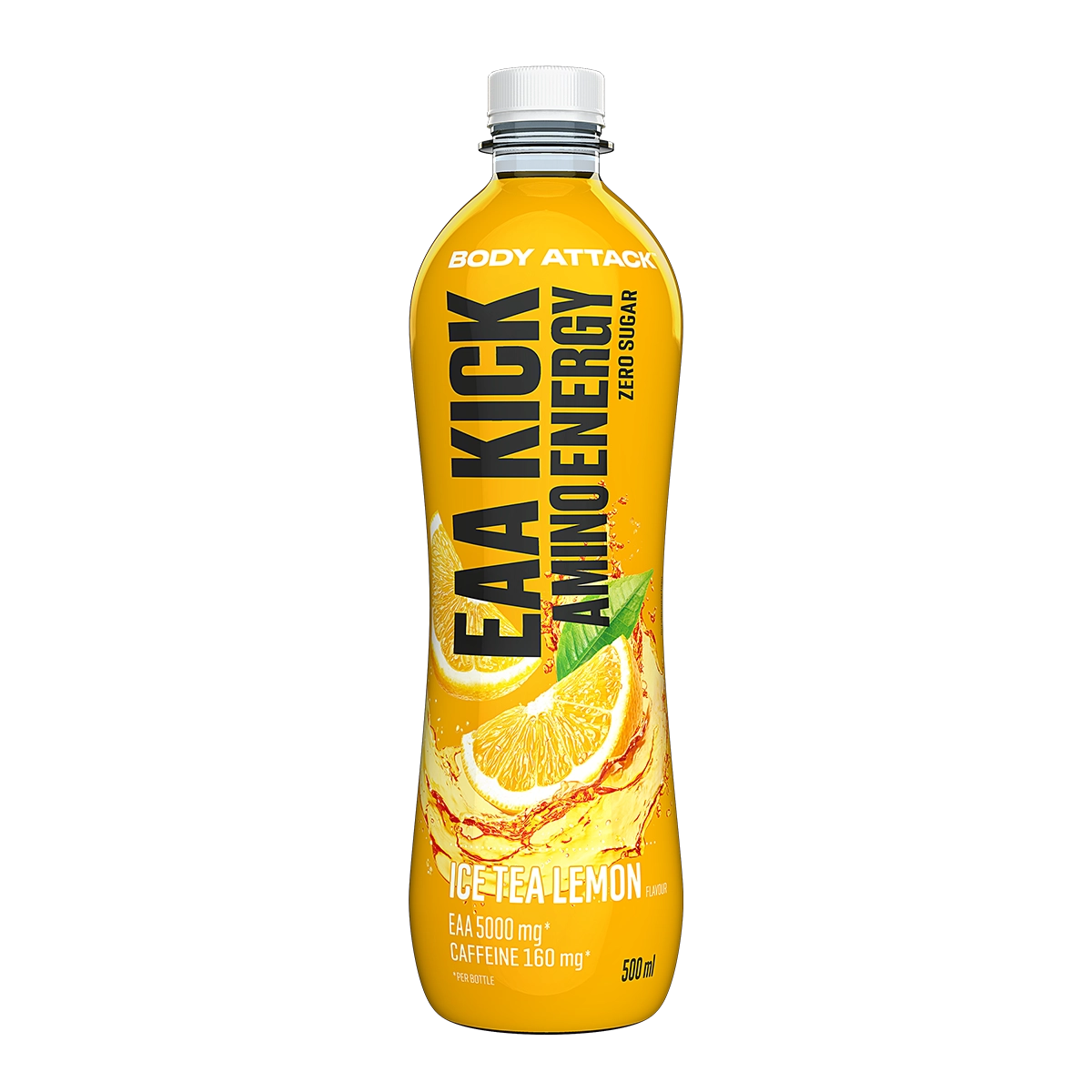
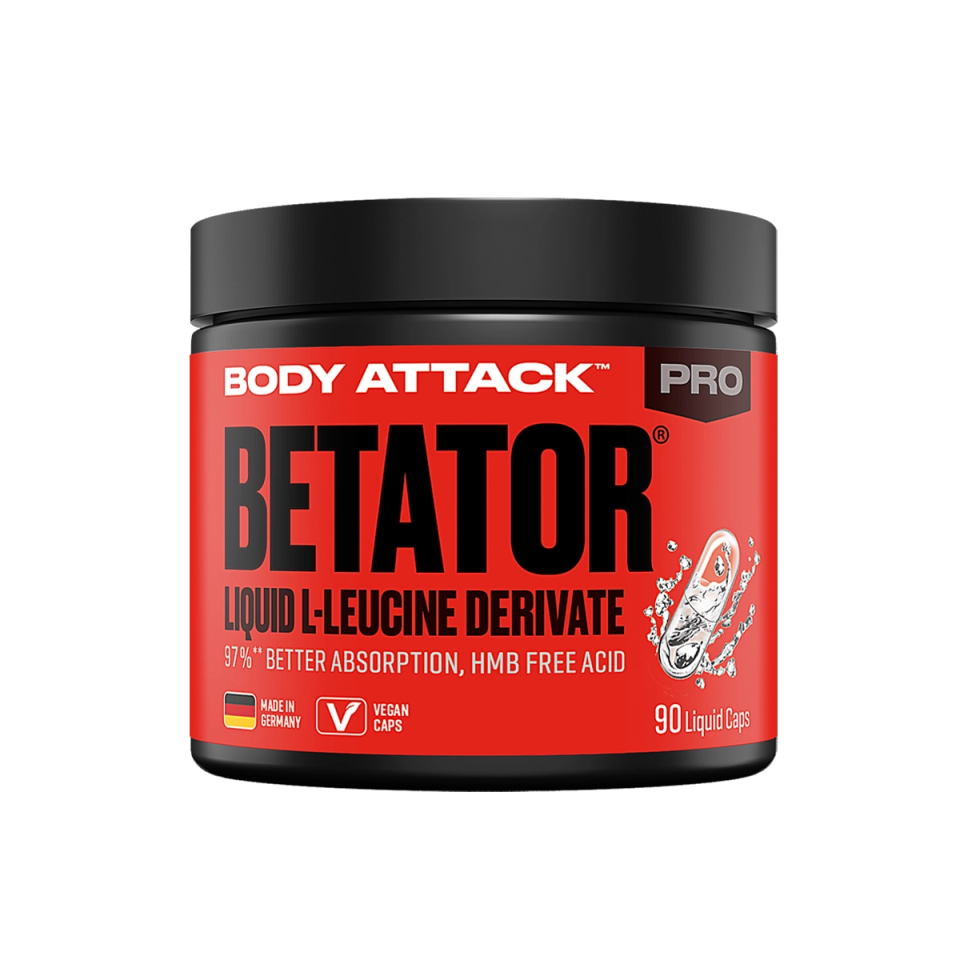
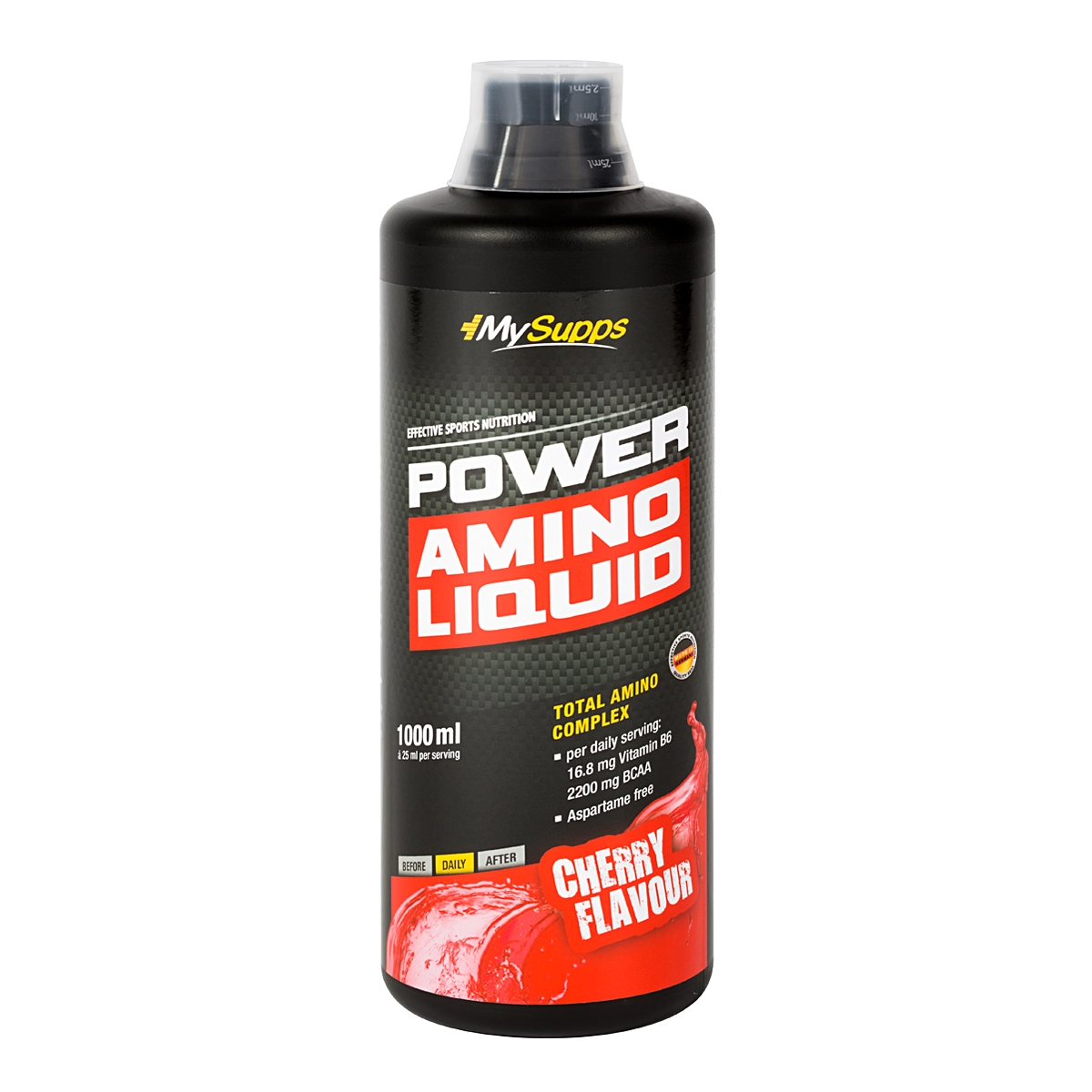
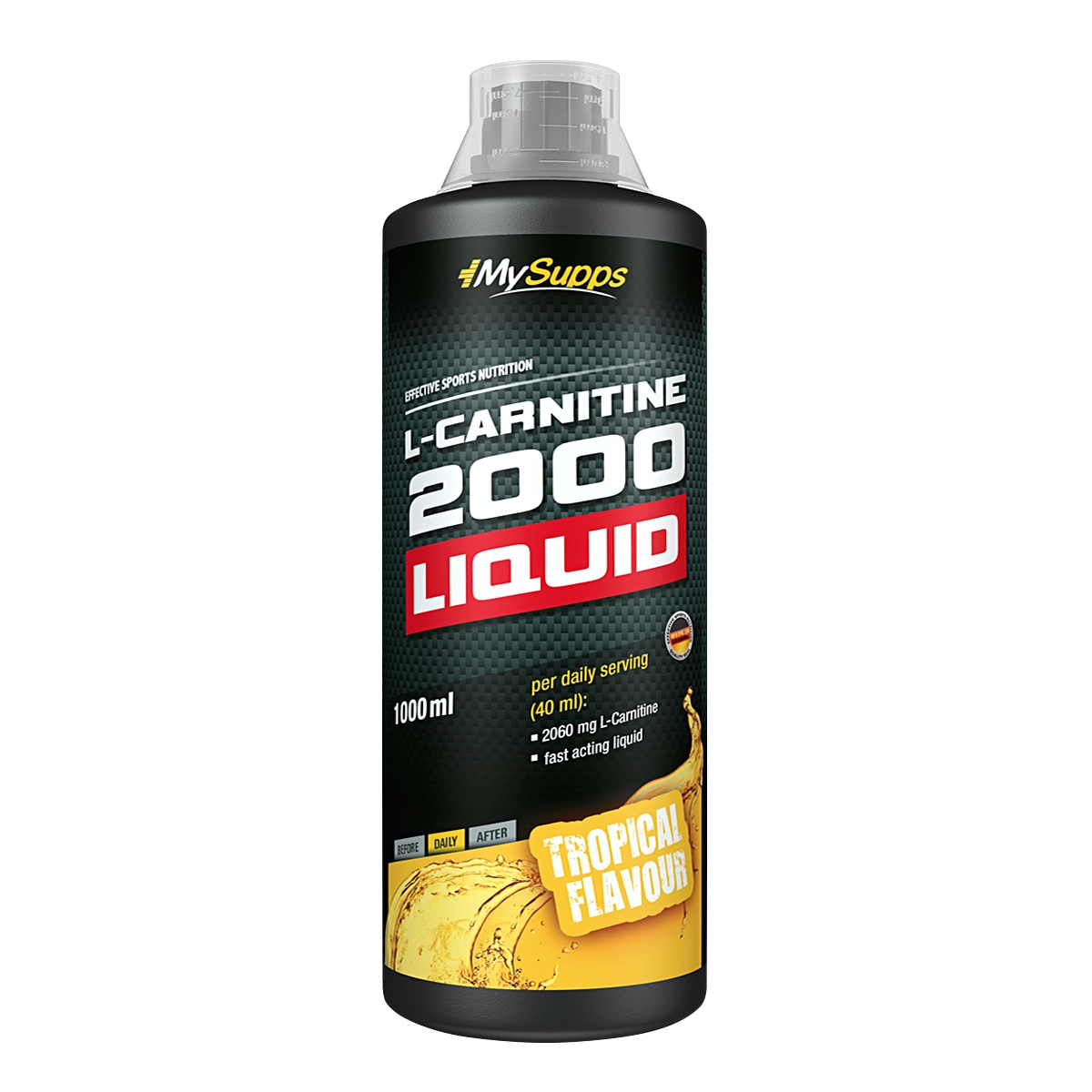
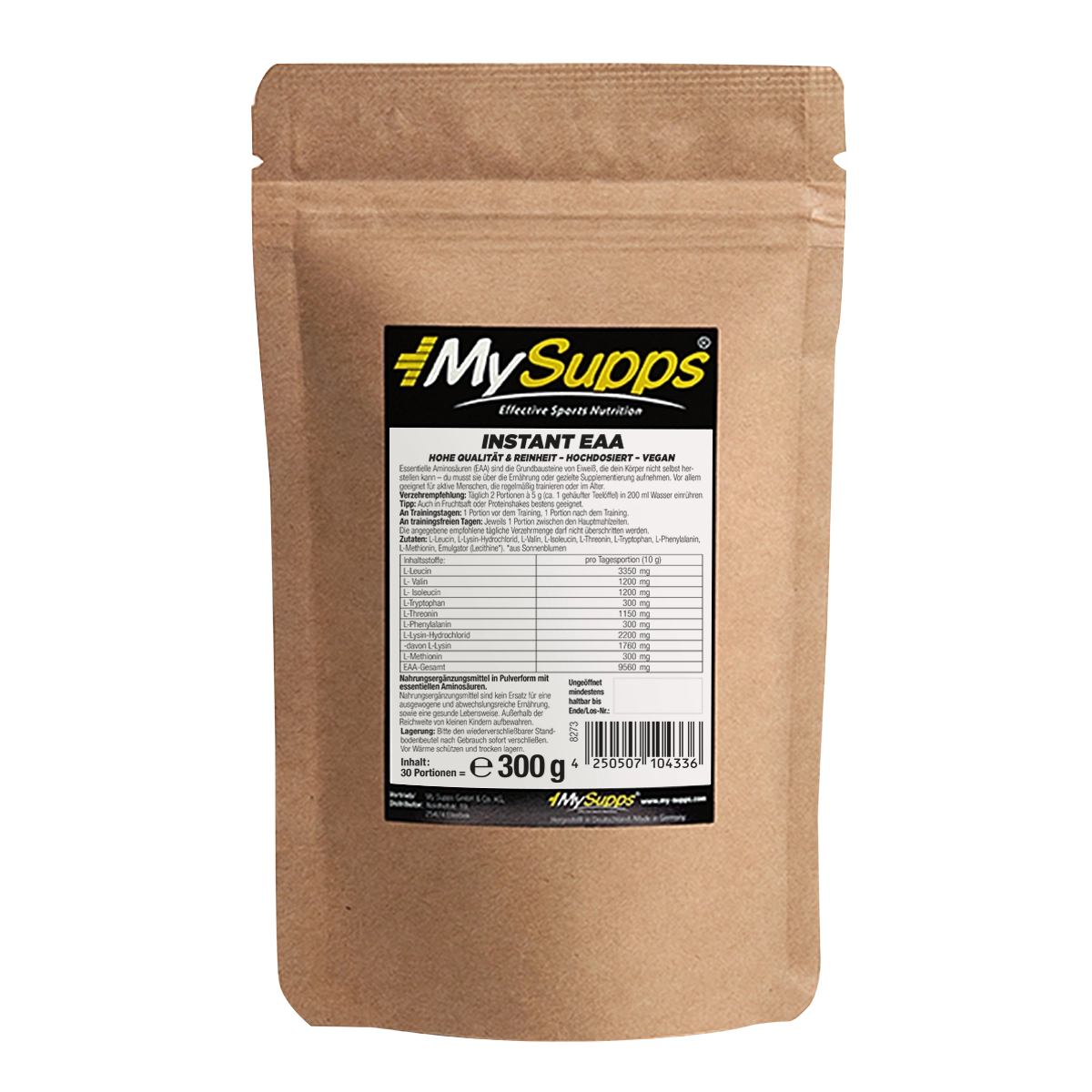
EAAs play an important role in metabolism and the immune system. They are involved in the formation of proteins and therefore in building processes such as muscle growth. We introduce you to the world of amino acids and explain everything you need to know about these essential building blocks.
Overview
EAA amino acids are essential for the body but cannot be produced by it from basic components. Suitable EAA products are typically used in sports nutrition for muscle-building training, as essential proteinogenic amino acids serve as building material for the body’s own proteins. If certain essential nutrients are lacking, not all proteins can be formed. However, as you know, proteins are responsible for building and maintaining muscle mass. Supplementation is therefore particularly beneficial for bodybuilders and strength athletes.
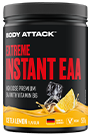
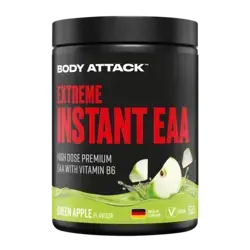
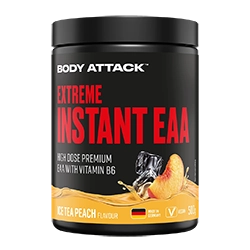
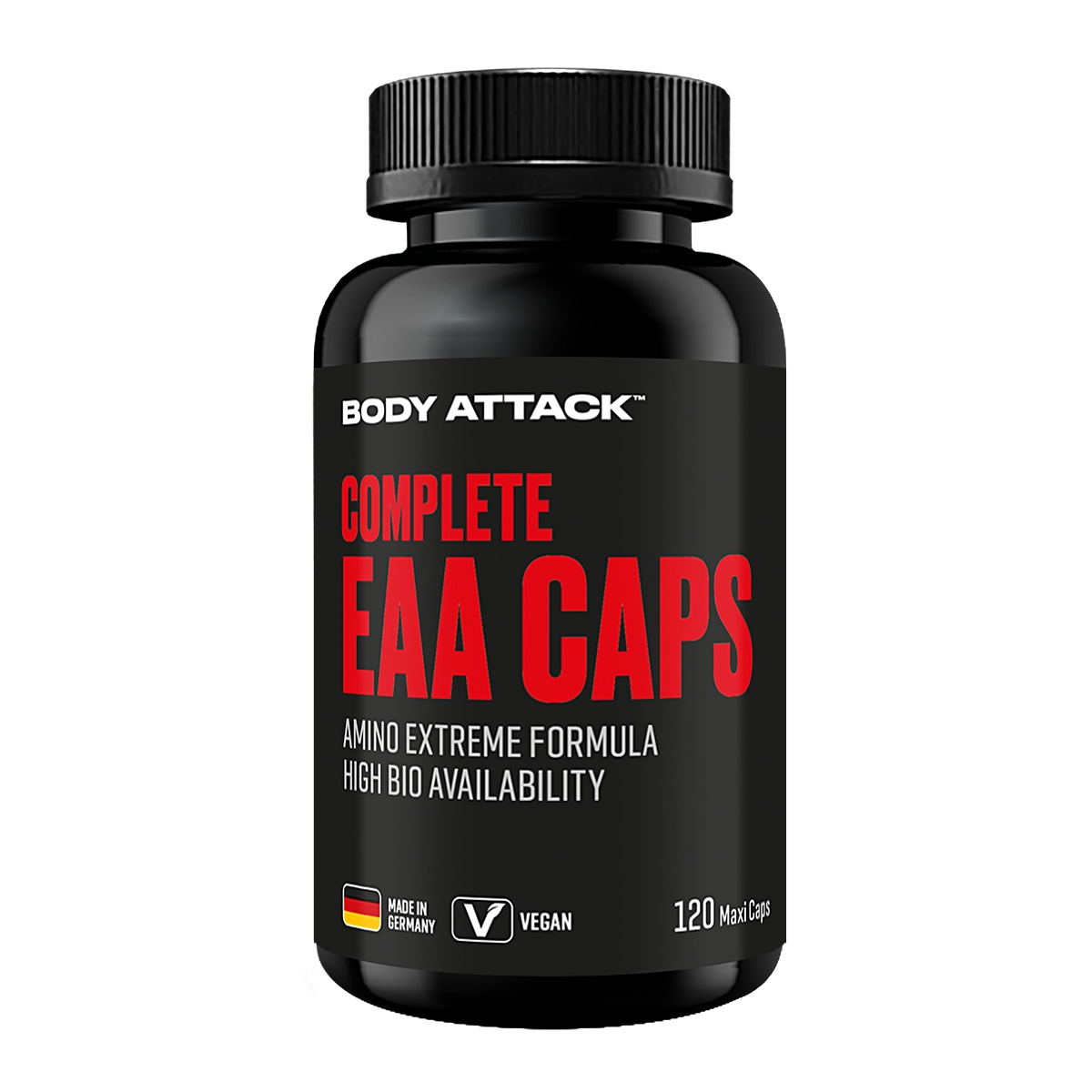
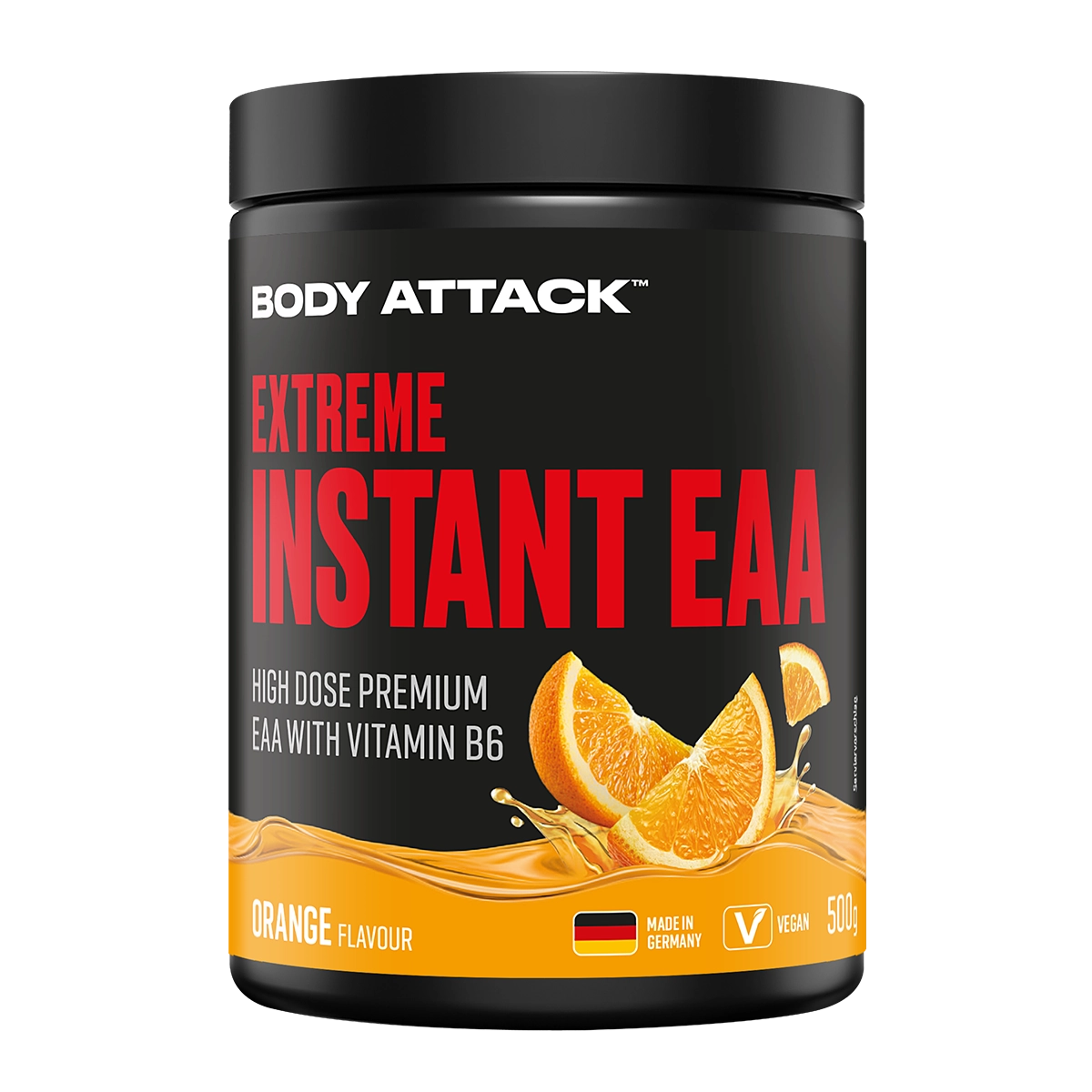
In addition, EAAs are involved in the production of hormones and blood cells. BODY ATTACK offers a variety of supplements with EAAs as high-quality dietary additions. You can choose between EAA powder or capsules.
Essential amino acids are vital and cannot be produced by the body itself. Therefore, they must be regularly supplied through the diet. If too few essential amino acids are consumed, this can lead to a loss of muscle mass.
Essential amino acids include:
Some amino acids, such as L-histidine or L-tyrosine, are essential for infants and young children but are only semi-essential or non-essential for adults. Therefore, they are not always included in the list.
Non-essential amino acids can be produced by the body itself. As a result, it is less critical that they are regularly consumed through the diet.
In addition, EAAs are involved in the production of hormones and blood cells. BODY ATTACK offers a variety of supplements with EAAs as high-quality dietary additions. You can choose between EAA powder or capsules.
DIFFERENCE BETWEEN ESSENTIAL AND NON-ESSENTIAL AMINO ACIDS
Essential amino acids include:
- L-phenylalanine
- L-tryptophan
- L-threonine
- L-lysine
- L-valine
- L-methionine
- L-leucine
- L-isoleucine
Some amino acids, such as L-histidine or L-tyrosine, are essential for infants and young children but are only semi-essential or non-essential for adults. Therefore, they are not always included in the list.
Non-essential amino acids can be produced by the body itself. As a result, it is less critical that they are regularly consumed through the diet.
Essential amino acids are responsible for the maintenance of various bodily functions. They must always be present in the body in a balanced form. If even one amino acid is not available in sufficient quantity, the others cannot be used for protein synthesis either and are instead broken down into fats and sugars.
Proteinogenic amino acids have a protein-forming function. They are involved in the formation of skin, hair, tissue, and bones, as well as in the production of hormones, enzymes, blood, and antibodies. Without proteins—meaning without their building blocks (amino acids)—human life would not be possible. Ultimately, all vital functions are regulated by protein levels.
EAA dietary supplements offer a convenient way to supply these important amino acids, which are especially significant for athletes. Browse our range and find the product that suits YOU!
Proteinogenic amino acids have a protein-forming function. They are involved in the formation of skin, hair, tissue, and bones, as well as in the production of hormones, enzymes, blood, and antibodies. Without proteins—meaning without their building blocks (amino acids)—human life would not be possible. Ultimately, all vital functions are regulated by protein levels.
EAA dietary supplements offer a convenient way to supply these important amino acids, which are especially significant for athletes. Browse our range and find the product that suits YOU!
EAAs are available on the sports nutrition market in powder and capsule form—including from BODY ATTACK. The recommended dosage varies depending on the product type and athletic goals and should always be followed.
EAAs can be taken as a standalone dietary supplement. However, they can also be combined with other supplements. Protein shakes or BCAAs (branched-chain amino acids) are particularly suitable for this purpose.
EAAs should generally be taken before, during, or immediately after intense training sessions. Capsules should be taken with plenty of fluids. EAAs (whether powder or capsules) can be mixed into shakes or carbohydrate-rich beverages.
EAAs can be taken as a standalone dietary supplement. However, they can also be combined with other supplements. Protein shakes or BCAAs (branched-chain amino acids) are particularly suitable for this purpose.
EAAs should generally be taken before, during, or immediately after intense training sessions. Capsules should be taken with plenty of fluids. EAAs (whether powder or capsules) can be mixed into shakes or carbohydrate-rich beverages.
EAAs are mainly found in protein-rich foods such as fish, meat, dairy products, and legumes. With a balanced diet, sufficient EAAs are usually consumed. In certain situations—such as during periods of intense physical exertion—a deficiency in essential amino acids may occur, which can be compensated for with dietary supplements.
Combine BCAAs with EAAs in a 50:50 ratio to achieve optimal results.
When combined with 20–30% high-glycemic carbohydrates, such as maltodextrin, the desired effects can be further enhanced.
Tips for Taking EAAs
When combined with 20–30% high-glycemic carbohydrates, such as maltodextrin, the desired effects can be further enhanced.
Who are EAAs important for? EAAs play a particularly important role for athletes. Proteins are built from essential amino acids, and proteins contribute to the building and maintenance of muscle mass. By supplying the body with proteins, the metabolic balance can be shifted toward muscle-building processes.
Fitness enthusiasts, strength athletes, and bodybuilders in particular should therefore pay attention to their amino acid balance, specifically ensuring an adequate intake of essential EAAs. Essential amino acids such as leucine, isoleucine, and valine—also known together as BCAAs—are stored in the muscles and make up around one third of muscle protein.
Fitness enthusiasts, strength athletes, and bodybuilders in particular should therefore pay attention to their amino acid balance, specifically ensuring an adequate intake of essential EAAs. Essential amino acids such as leucine, isoleucine, and valine—also known together as BCAAs—are stored in the muscles and make up around one third of muscle protein.
The term biological value describes the quality of dietary proteins (proteins found in foods). In general, the better these dietary proteins can be converted into the body’s own proteins, the higher their biological value.
One important criterion for efficient conversion is the amino acid composition of the proteins. The higher the EAA content, the higher the biological value usually is. Therefore, it is important to consume high-quality proteins with a high EAA content in order to achieve a balanced or positive protein balance as quickly as possible.
One important criterion for efficient conversion is the amino acid composition of the proteins. The higher the EAA content, the higher the biological value usually is. Therefore, it is important to consume high-quality proteins with a high EAA content in order to achieve a balanced or positive protein balance as quickly as possible.