








13 Articles

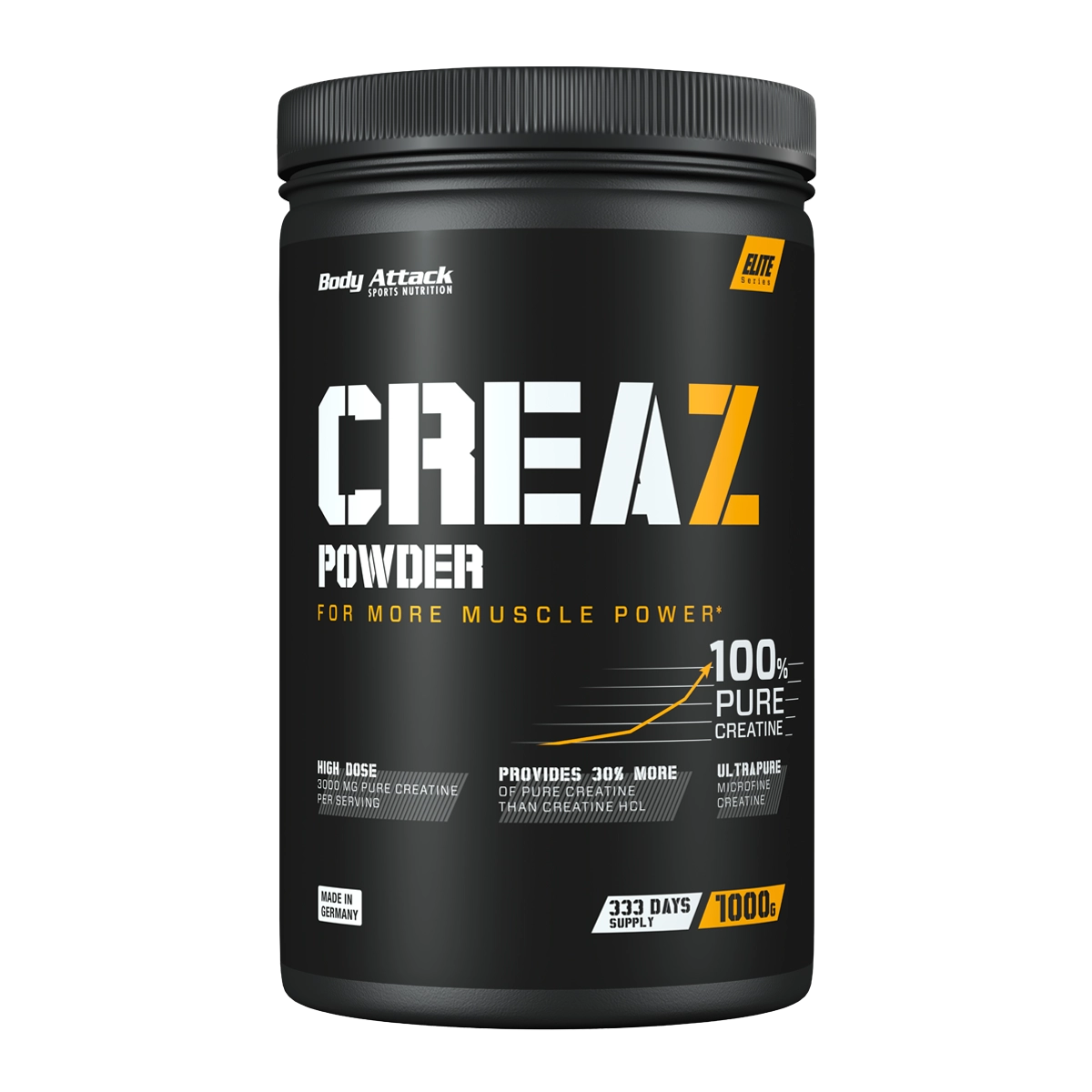
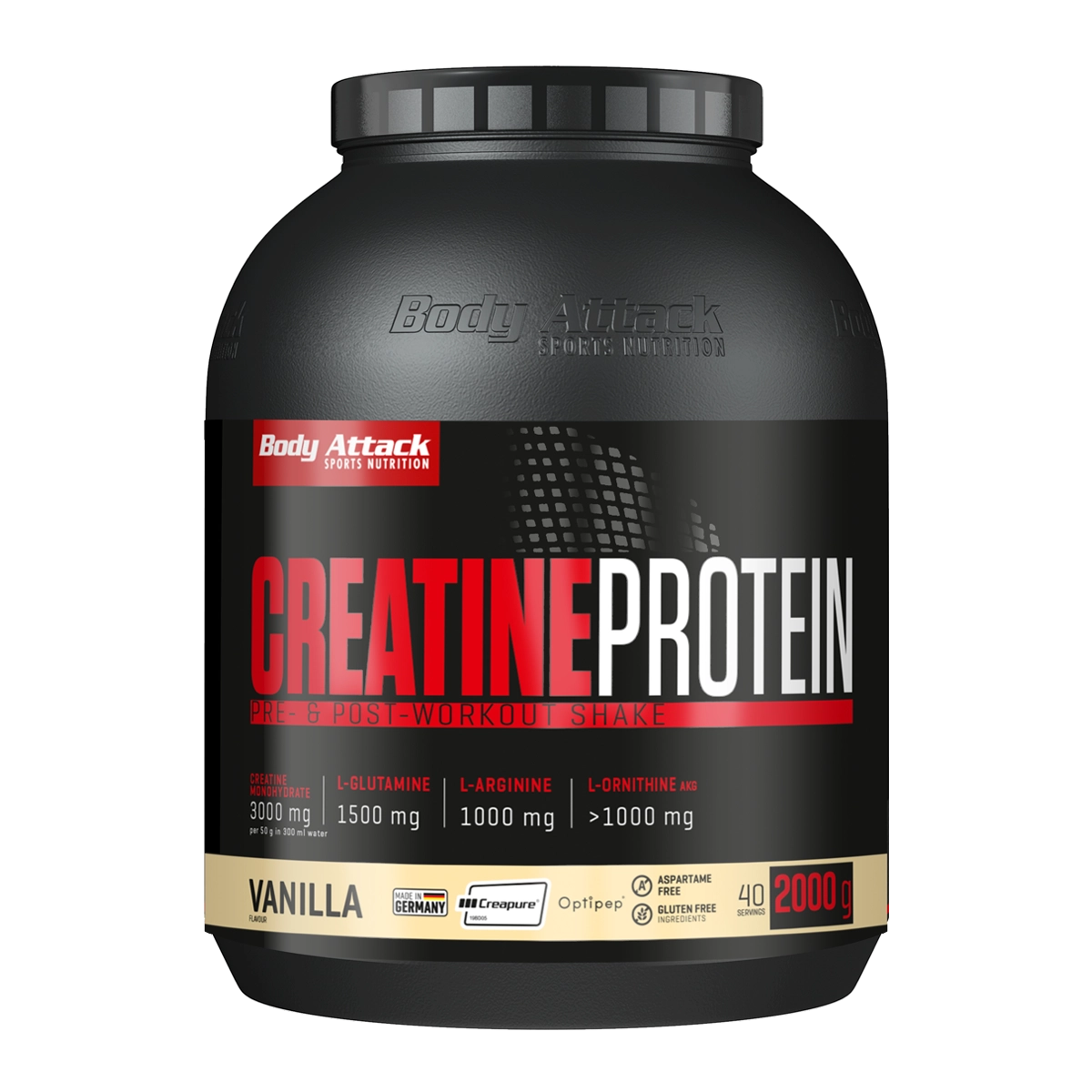
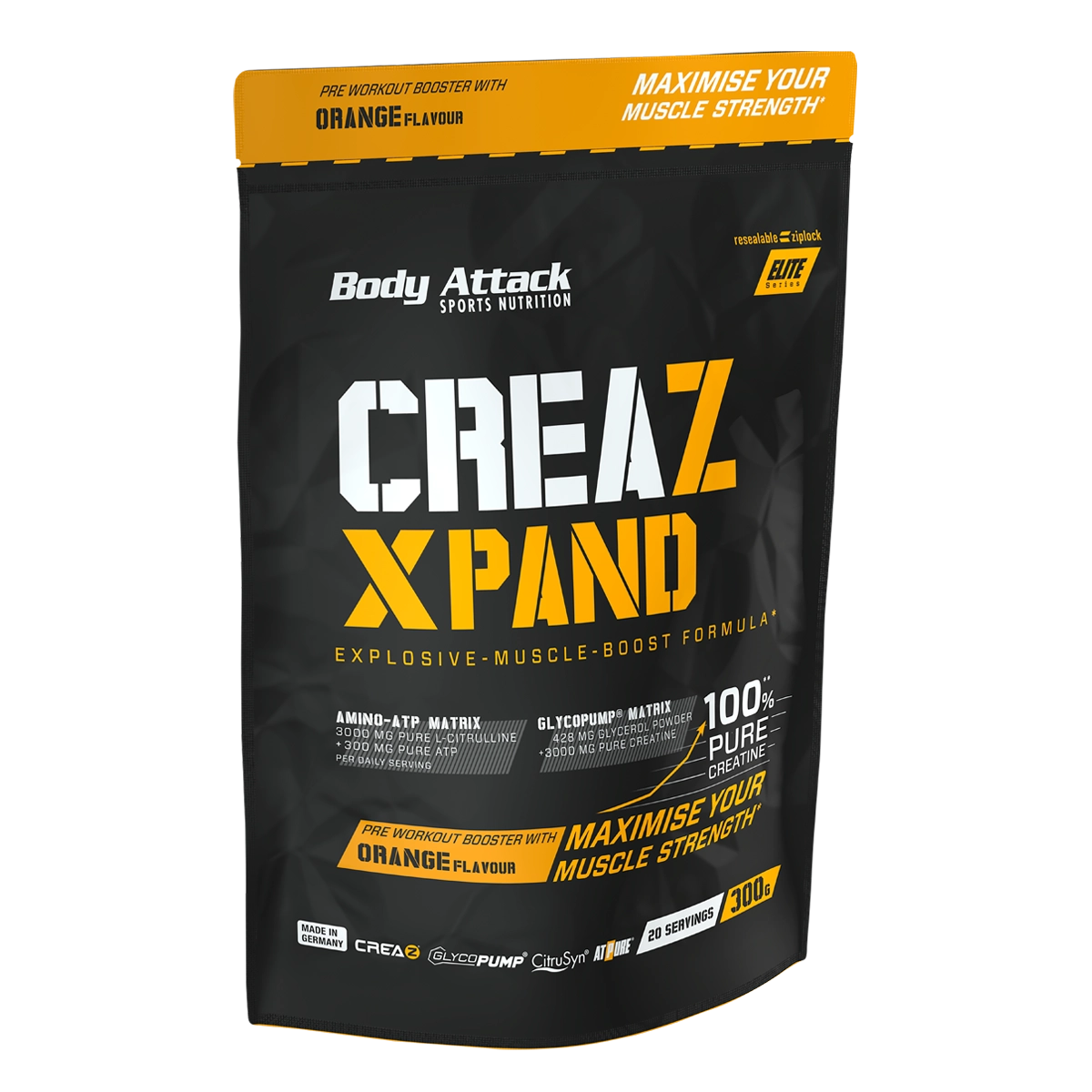
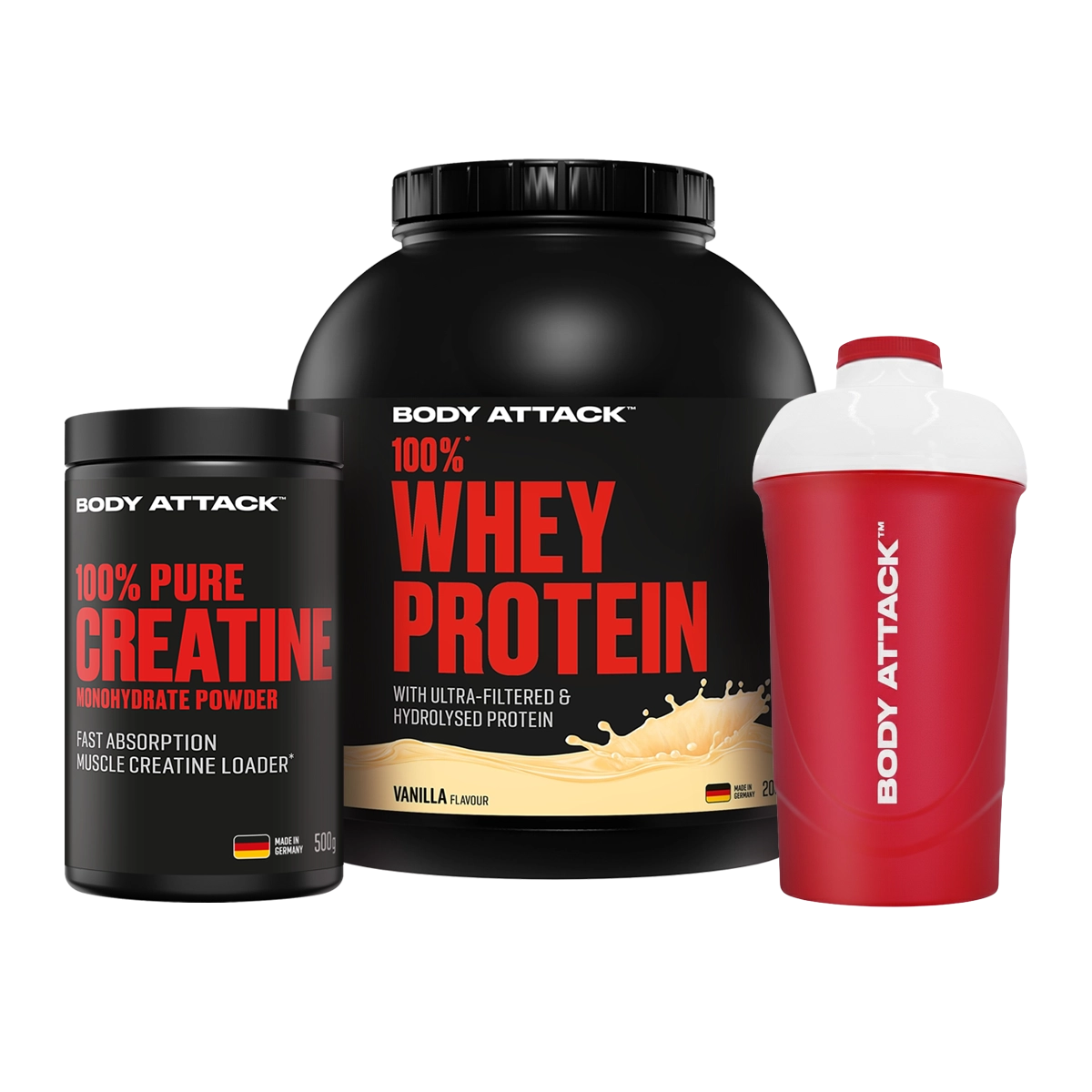
Creatine (or “Kreatin”) is, roughly speaking, a substance involved in energy supply. It helps you generate strength for your exercises in the gym, for example. The human body can produce small amounts of creatine on its own – around 1–2 g per day. This takes place in the kidneys, liver, and pancreas with the help of the amino acids arginine, glycine, and methionine. It is then stored in the muscles, with over 90% as creatine phosphate.
In nature, traces of creatine can be found in many foods. The only noteworthy sources are red meat, fish, and eggs. However, a large portion is destroyed during frying/cooking, which is why relying on food as a source is only possible to a limited extent.
To achieve a noticeable effect, 3–5 g of creatine per day are recommended. Supplementation therefore makes sense, since for most athletes it is simply too inconvenient to eat such large amounts of meat every day in order to get enough creatine through nutrition.
In nature, traces of creatine can be found in many foods. The only noteworthy sources are red meat, fish, and eggs. However, a large portion is destroyed during frying/cooking, which is why relying on food as a source is only possible to a limited extent.
To achieve a noticeable effect, 3–5 g of creatine per day are recommended. Supplementation therefore makes sense, since for most athletes it is simply too inconvenient to eat such large amounts of meat every day in order to get enough creatine through nutrition.
In this article, we’ll clarify all these questions (and many more!). In the end, you’ll know exactly how to use it optimally for muscle growth, how much you need, how you should take it, what it does—and much, much more.
Overview
- Creatine enhances performance during short, intense efforts. As we just explained, it mainly helps you when lifting very heavy weights. This can show in the fact that you can not only handle more weight, but also perform more repetitions. In the long run, it makes a clear difference whether you bench 5 x 5 with 100 kilograms or manage 5 x 6 with 105 kilograms!
- As a consequence of the first point, creatine supports muscle growth. If you can handle more weight for more reps, you will naturally build more muscle over time. In addition, creatine helps you recover faster and keep rest periods between sets shorter, which also benefits muscle growth!
- Creatine stores water in the muscles, which is beneficial for two reasons. First, increased water retention makes the muscle appear fuller and larger. Second, it also creates a kind of “buffer function” for the muscle – like a small airbag in your arm!
Creatine comes in many different forms and variations, for example
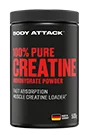
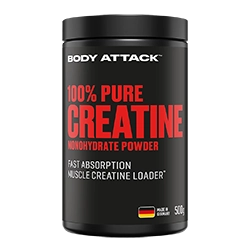
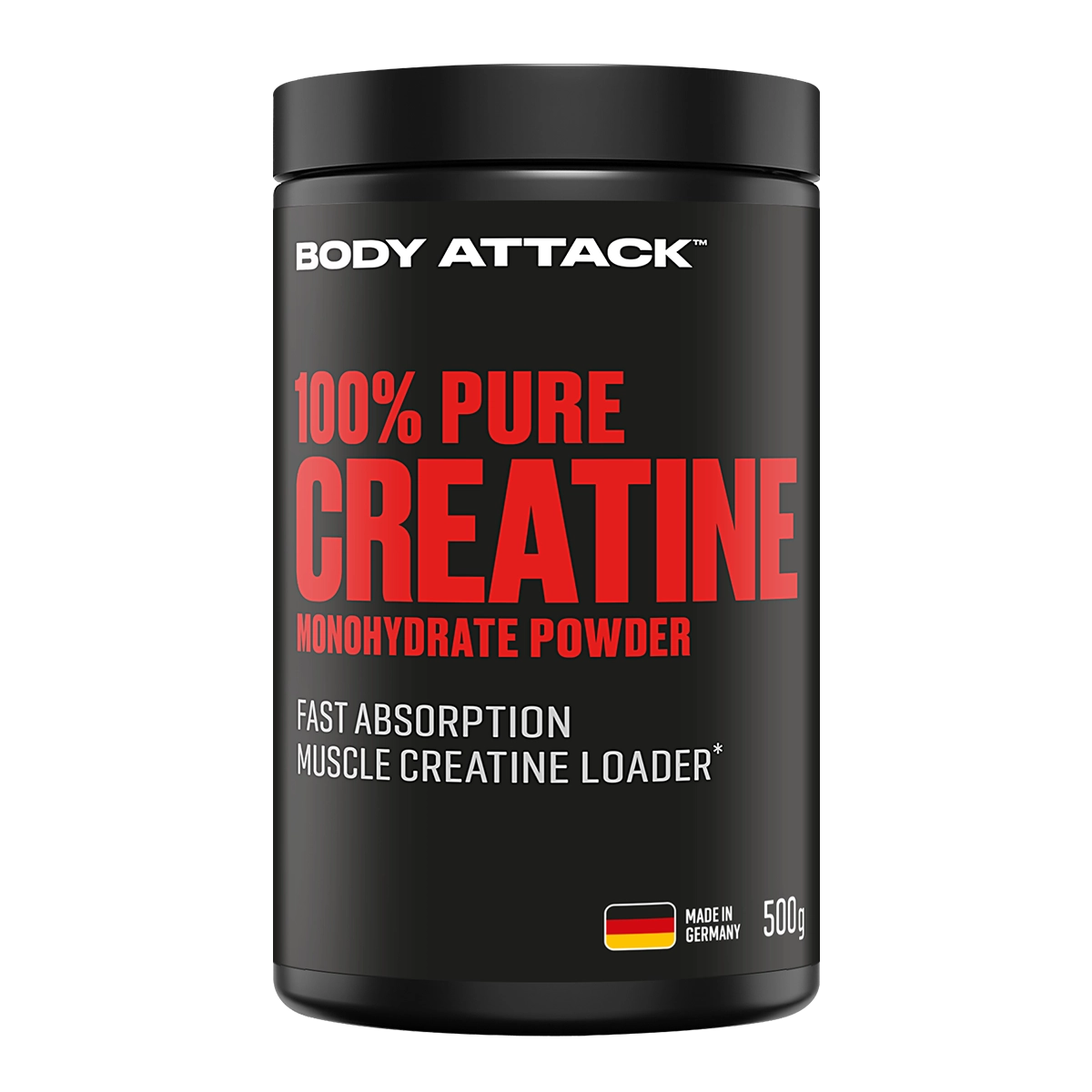
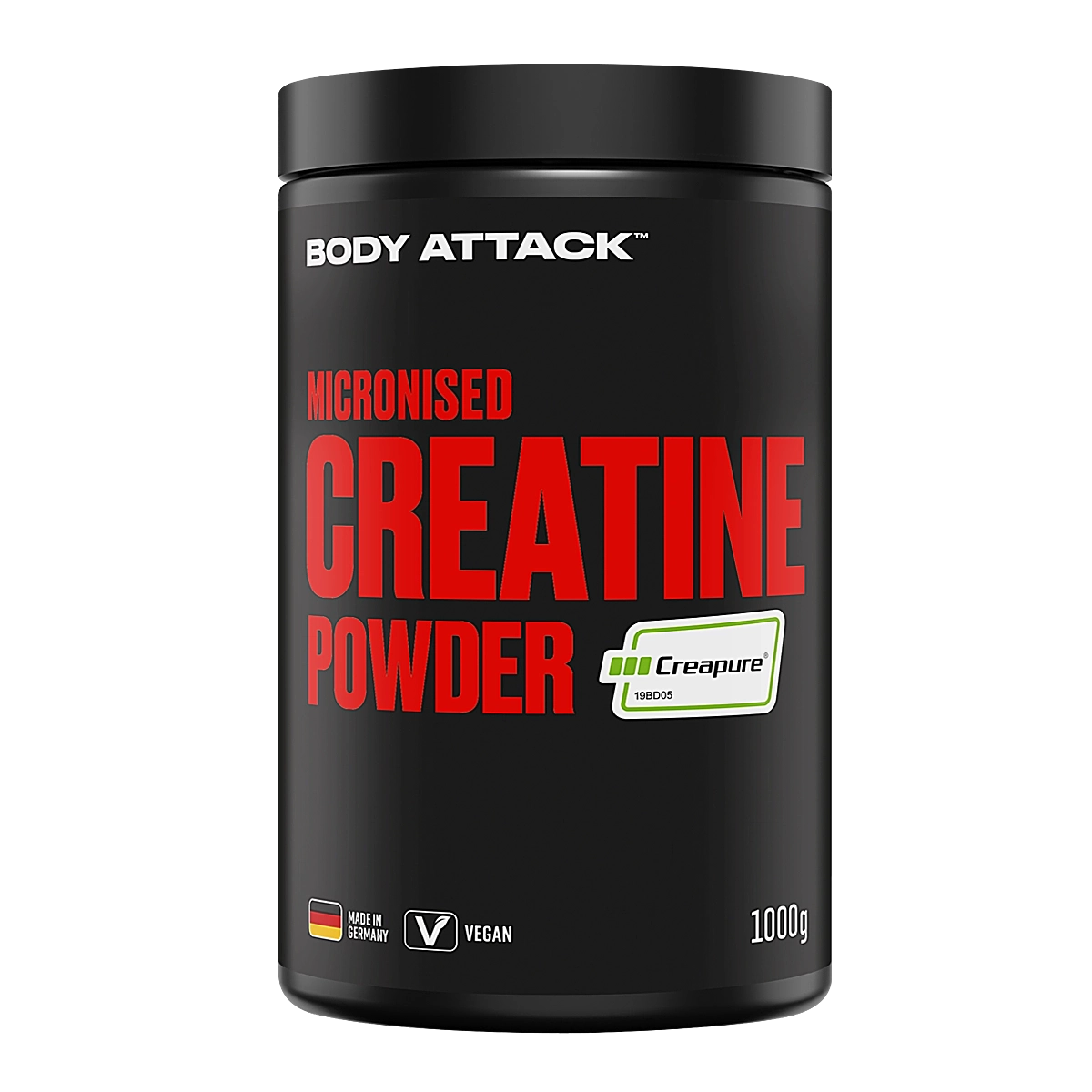
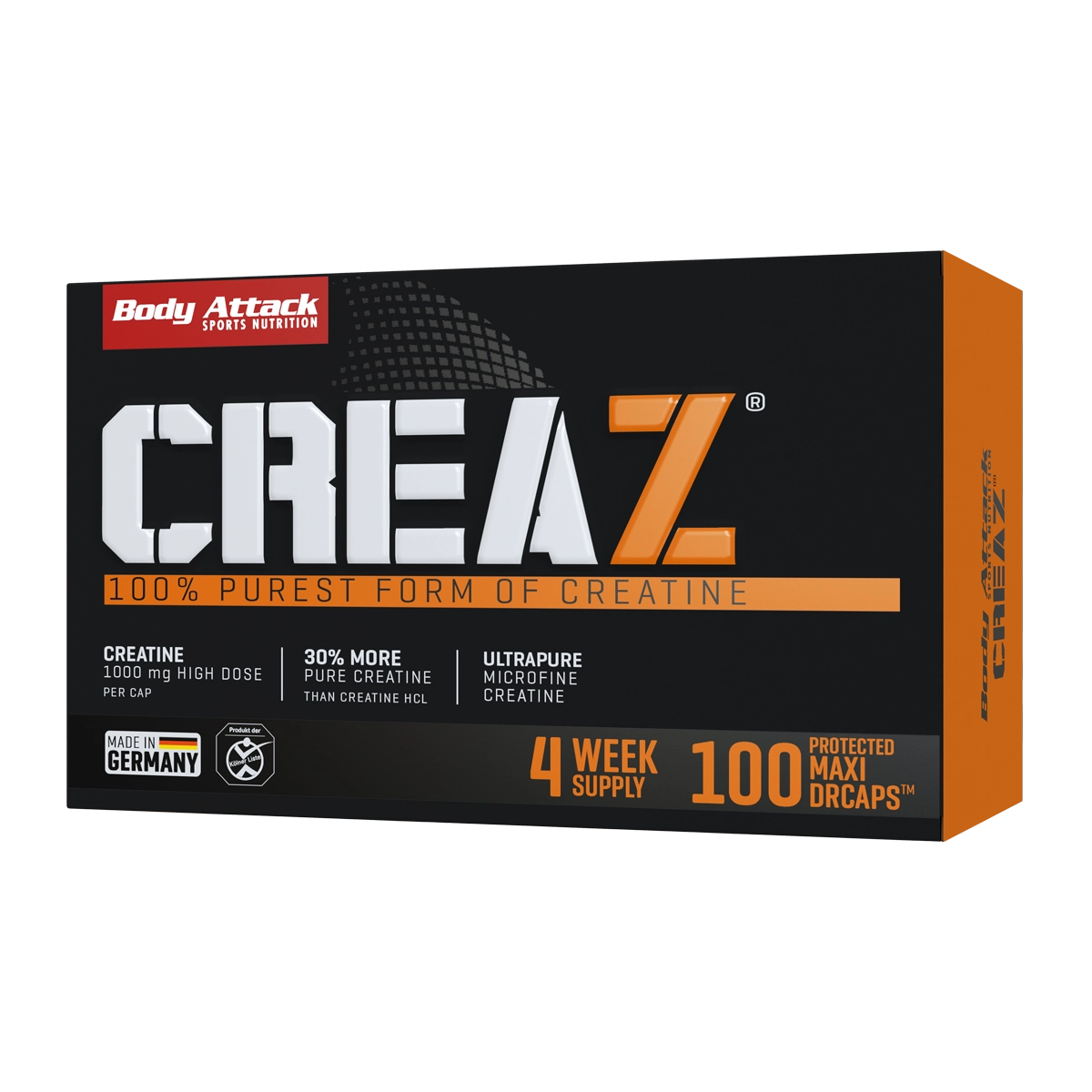
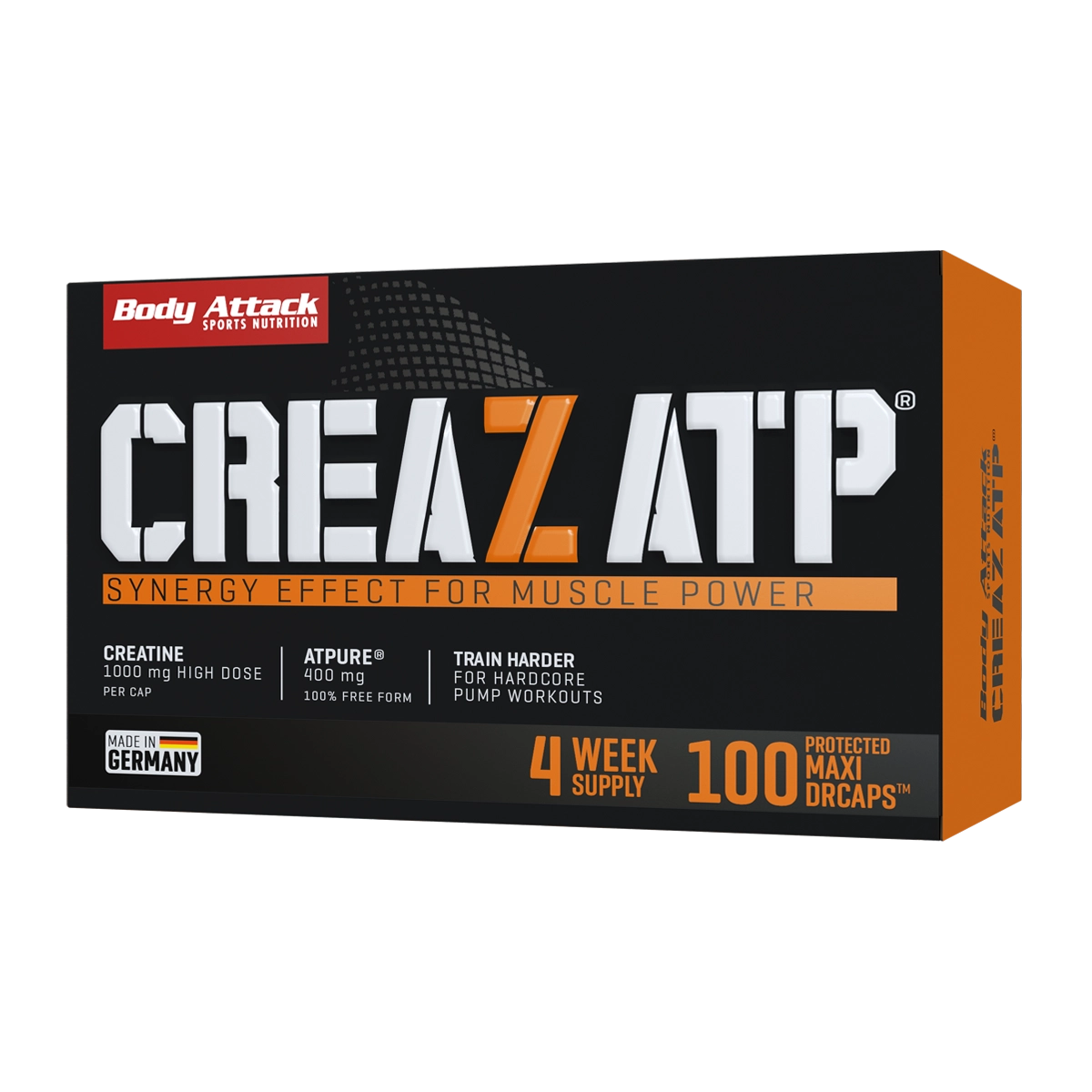
BODY ATTACK offers powder and capsules in its range. All forms of administration basically contain the same ingredient, which is why the difference lies less in the effect and more in how it is taken and in the taste.
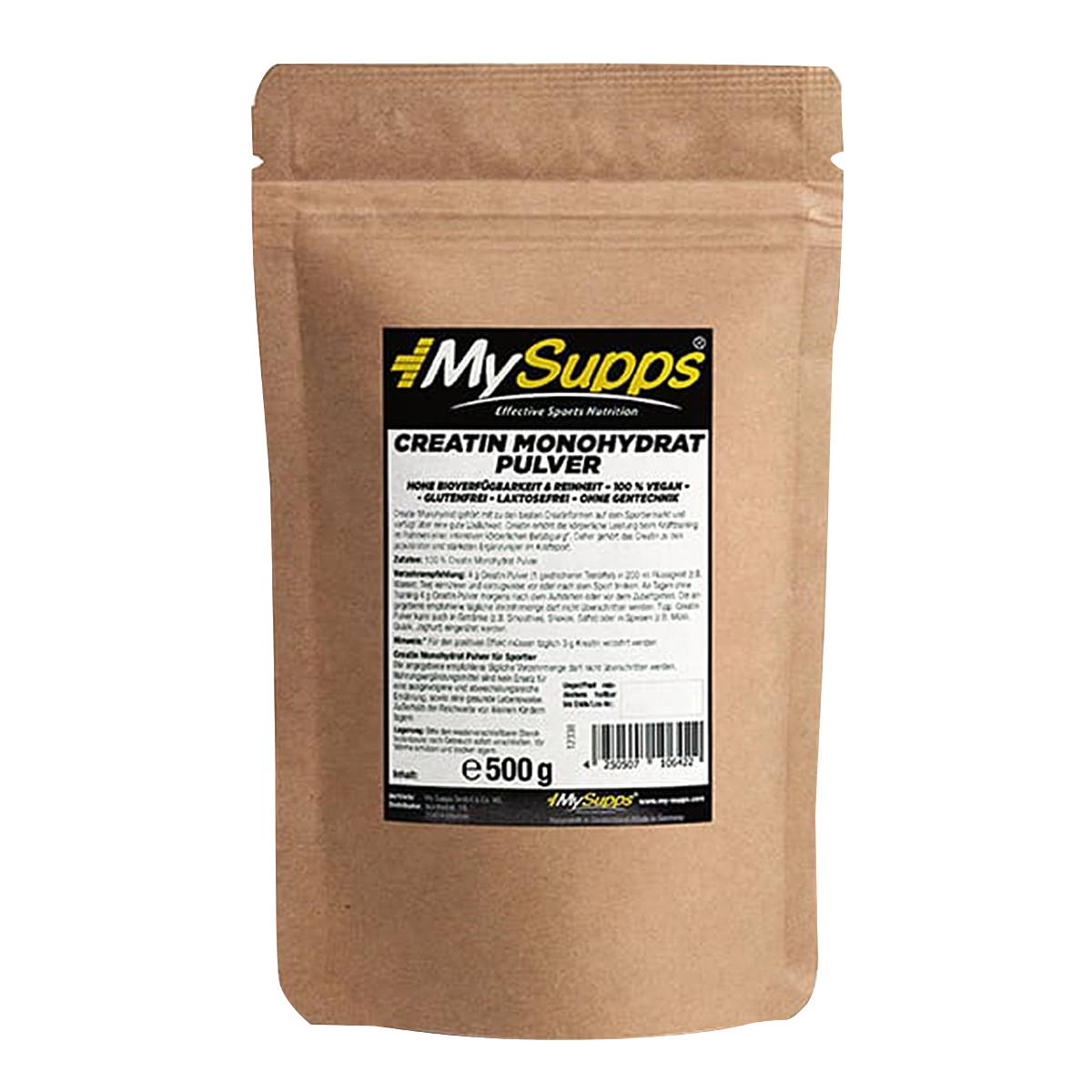
The powder form is the most affordable, but of course it always has to be measured out and mixed with liquid. You can easily and conveniently take your creatine powder directly with your post-workout shake.
Capsules are probably the most convenient option of the three. The powder is enclosed in water-soluble capsules, which are usually much smaller than tablets. This allows for easy transport, simple dosing, and of course the most pleasant intake.
- in powder form
- as capsules
- as a liquid or tablet
The powder form is the most affordable, but of course it always has to be measured out and mixed with liquid. You can easily and conveniently take your creatine powder directly with your post-workout shake.
Capsules are probably the most convenient option of the three. The powder is enclosed in water-soluble capsules, which are usually much smaller than tablets. This allows for easy transport, simple dosing, and of course the most pleasant intake.
Note: Most athletes choose the powder form because it is the most affordable and can conveniently be taken with a shake after training. If you travel a lot, you should rather choose the capsule form!
You may have already heard about the different types:
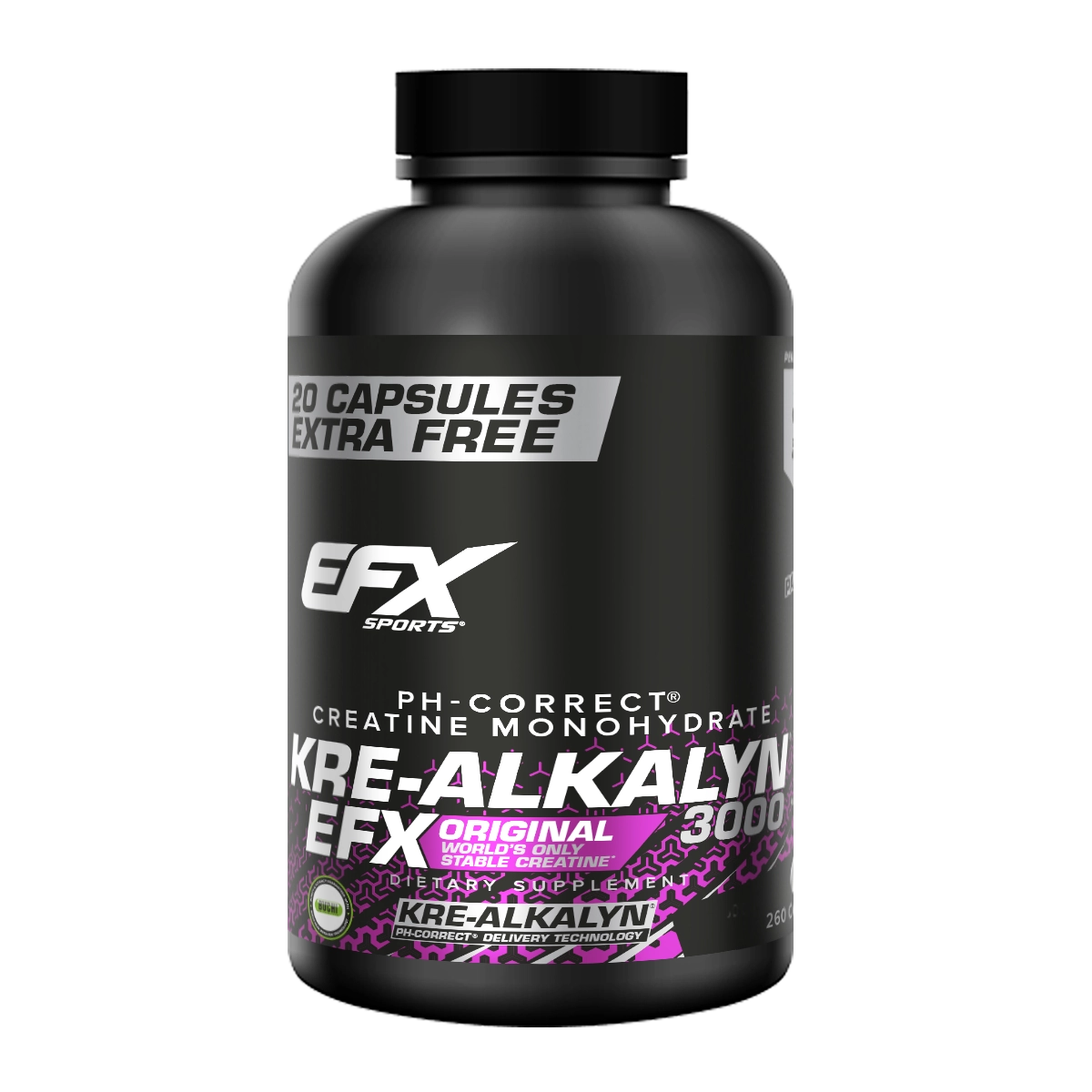
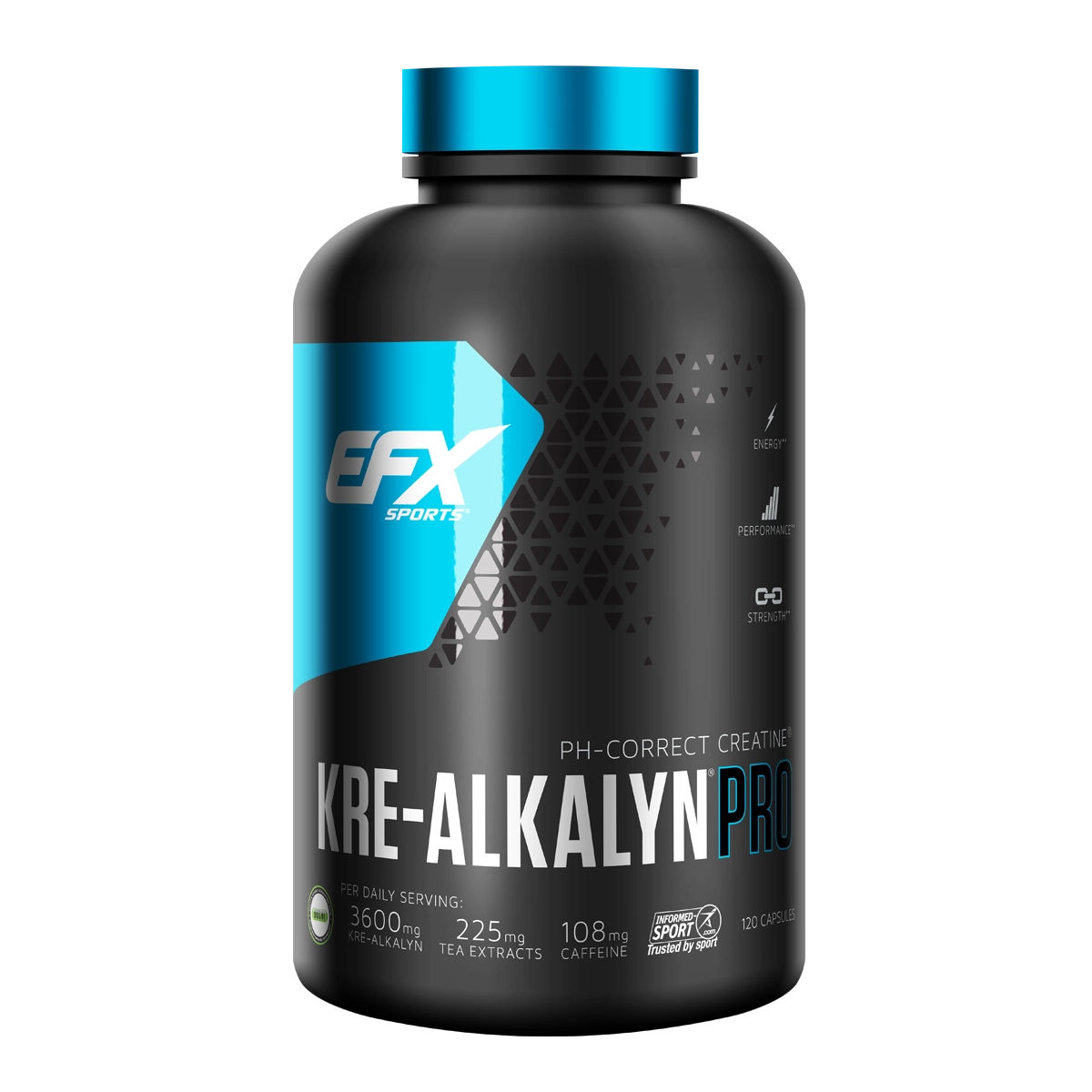
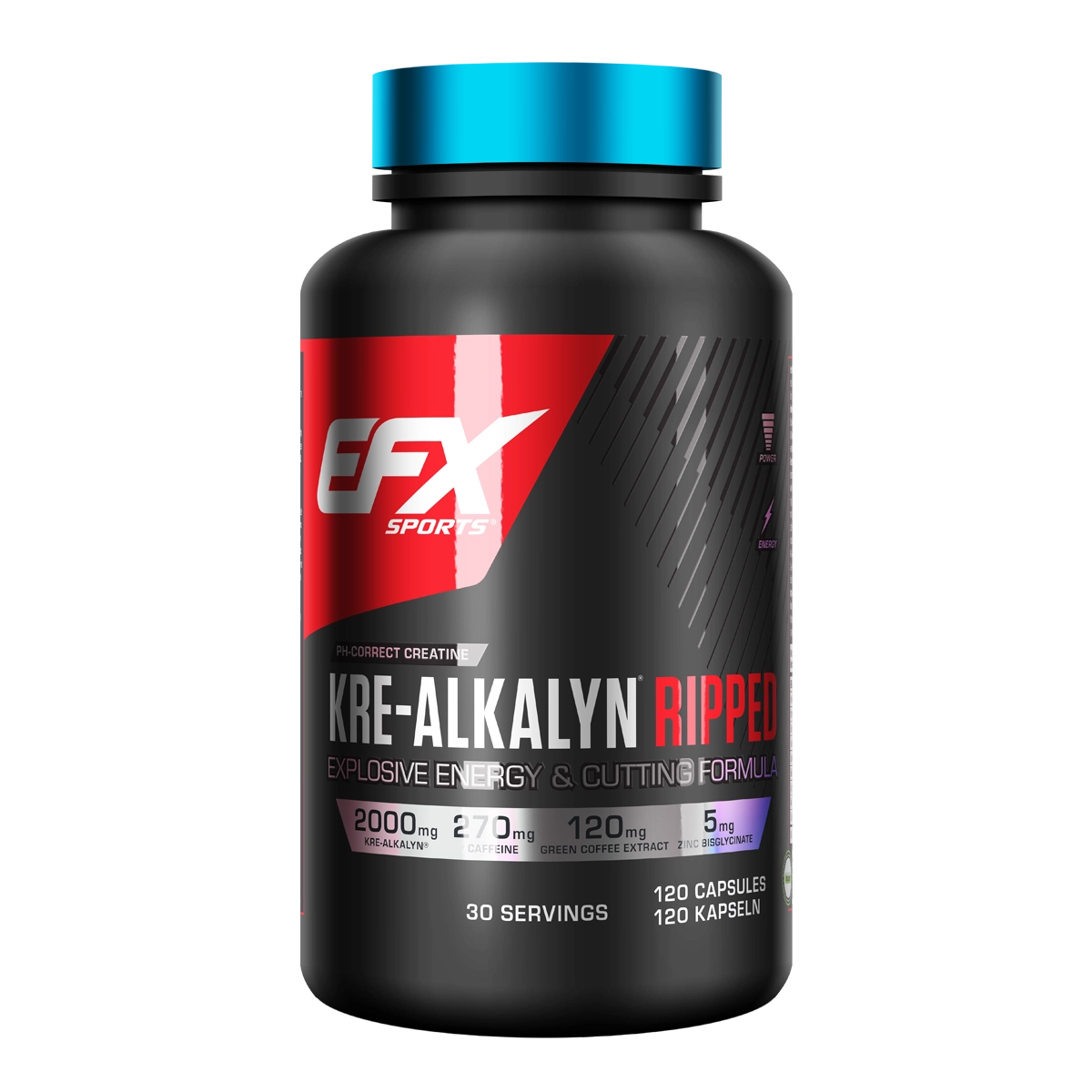
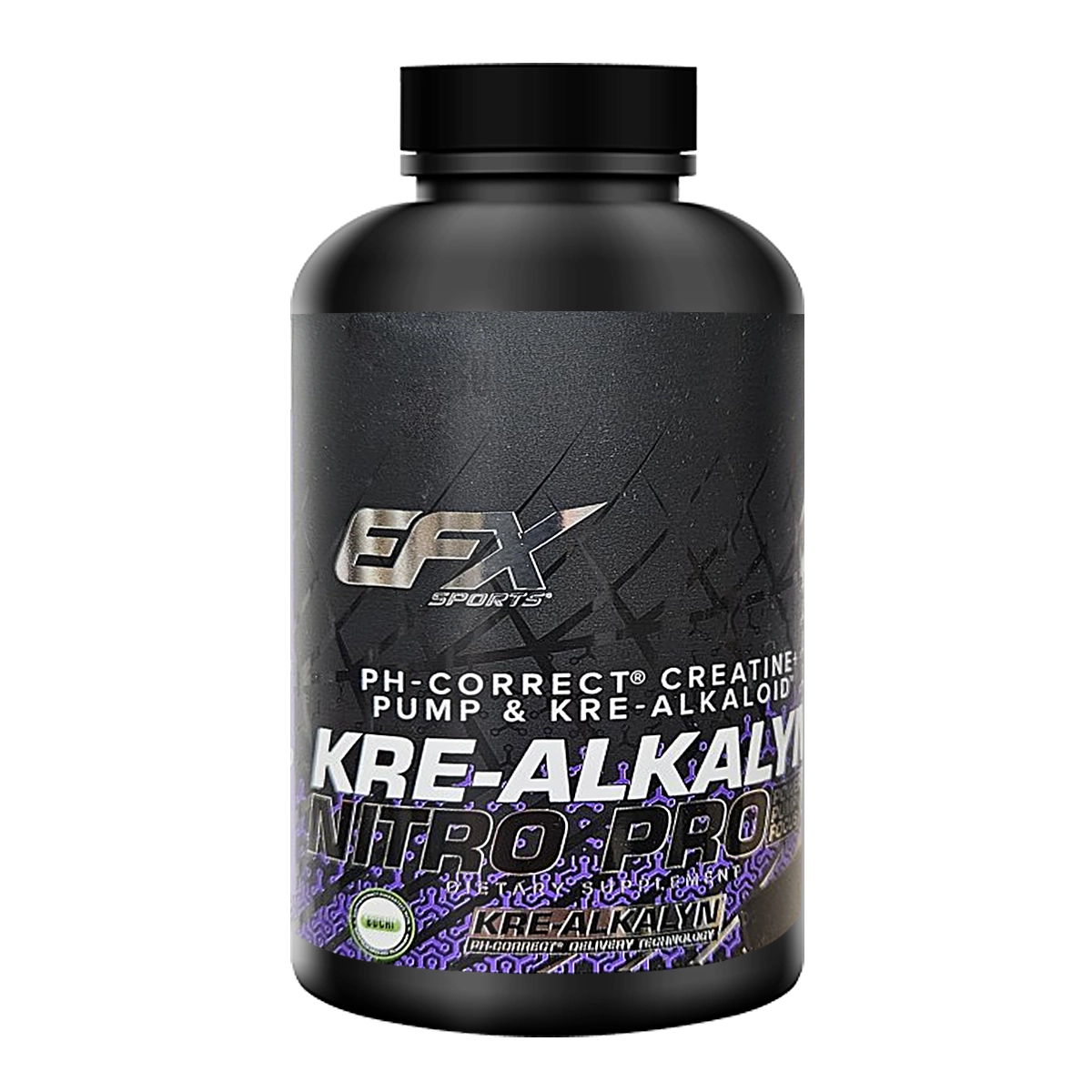
But which of the many forms of this supplement is the best for you? Kre-Alkalyn is often referred to as buffered creatine and is said to protect against moisture. If it is stored in water for too long, it breaks down into creatinine and loses part of its effect. However, as long as you don’t mix it into water hours before taking it, you shouldn’t have any problems.
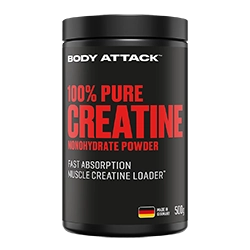
Creatine monohydrate is the most common and recommended type of creatine. The vast majority of strength athletes use the monohydrate form because it is not only the most affordable, but also easy to take. In addition, it is generally just as effective as any other form (as long as the quality is right).
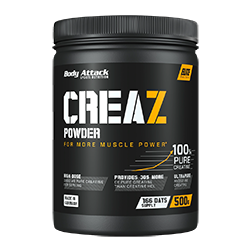
Creapure is not really a different type of supplement, but rather a label for particularly pure creatine produced in Germany. If you value a product that is Made in Germany, you should look for the Creapure seal. It is a bit more expensive, but guarantees the highest quality. PS: 100% pure, water-free and unbound creatine with the “Zero Monohydrate” formula is available with CREAZ!
Micronized creatine solves a small issue that can sometimes occur with standard monohydrate: depending on the quality level, the texture can be a bit sandy, which affects the drinking experience. Micronized creatine is very fine-grained, allowing it to dissolve quickly in water and results in a smoother consistency.
- Creatine monohydrate
- Creatine alpha-ketoglutarate – Creatine AKG
- Kre-Alkalyn
- Creapure
- Anhydrous creatine (CREAZ)
- Micronized creatine
But which of the many forms of this supplement is the best for you? Kre-Alkalyn is often referred to as buffered creatine and is said to protect against moisture. If it is stored in water for too long, it breaks down into creatinine and loses part of its effect. However, as long as you don’t mix it into water hours before taking it, you shouldn’t have any problems.
Creatine monohydrate is the most common and recommended type of creatine. The vast majority of strength athletes use the monohydrate form because it is not only the most affordable, but also easy to take. In addition, it is generally just as effective as any other form (as long as the quality is right).
Creapure is not really a different type of supplement, but rather a label for particularly pure creatine produced in Germany. If you value a product that is Made in Germany, you should look for the Creapure seal. It is a bit more expensive, but guarantees the highest quality. PS: 100% pure, water-free and unbound creatine with the “Zero Monohydrate” formula is available with CREAZ!
Micronized creatine solves a small issue that can sometimes occur with standard monohydrate: depending on the quality level, the texture can be a bit sandy, which affects the drinking experience. Micronized creatine is very fine-grained, allowing it to dissolve quickly in water and results in a smoother consistency.
For the correct dosage of creatine, you should know that the creatine stores in your muscles are limited. Once the storage is full, it’s full. An overdose of up to 20 g per day, as promoted by some professionals, is therefore simply pointless. Since we need around 5 g per day, but the body can only produce a maximum of 2 g on its own, we have to supply the rest additionally. Foods such as red meat do contain higher amounts, but you would have to eat kilos of meat every day to reach effective dosages. This is where proper creatine supplementation supports you.
In the past, creatine was often taken in so-called “loading phases” or cycles because this method was hoped to achieve a better effect. During this, people would take up to 20 g daily for the first 5–7 days, and then reduce the dosage to around 2–3 g afterwards. However, such a high amount can lead to cramps or diarrhea.
In addition, it has been found that a loading phase offers no significant advantage. It only helps you reach the desired effect faster, but you also take on the risk of side effects. The fruit juice myth can also be disproven in this context: in the past it was often claimed that creatine is only absorbed by the body in the presence of simple sugars, which is why it was mixed with sugary juices. But this is not necessary — it is absorbed by the body either way!
So far, studies have not been able to show any risks from long-term creatine intake. Therefore, the answer is: yes, you can supplement it permanently. The initial suspicion of kidney damage has also been scientifically disproven. The effect does not decrease even with continuous use. Ideally, you should take an additional 3–5 g per day, depending on your body weight. But make sure to combine your powder/capsules with enough water.
Whether in the morning, at midday, or in the evening: the body stores the creatine and uses it when it needs it. With continuous supplementation, the stores are sufficiently filled!
Is a loading phase necessary?
In addition, it has been found that a loading phase offers no significant advantage. It only helps you reach the desired effect faster, but you also take on the risk of side effects. The fruit juice myth can also be disproven in this context: in the past it was often claimed that creatine is only absorbed by the body in the presence of simple sugars, which is why it was mixed with sugary juices. But this is not necessary — it is absorbed by the body either way!
Can I supplement creatine permanently?
Whether in the morning, at midday, or in the evening: the body stores the creatine and uses it when it needs it. With continuous supplementation, the stores are sufficiently filled!
Note: Supplement 3–5 g of creatine every day at any time of day. The important thing is to take it consistently so the stores can fill up. It has proven effective to mix the powder directly into your post-workout shake!